
Interview with Dr. Tim Dice: Avoiding Injuries in the Garden
Fingers crossed that this lovely weather isn't another False Spring! Temperatures are rising, the buds in my garden are blooming, and the insects are slowly starting to bounce from flower to flower. I am ready to finally throw on my gardening gloves and live out my "new year, new garden" dreams. Sometimes though, it feels like "new year, old aches."
As a sustainable landscape designer, I care about sustaining both the environment and people’s ability to garden. The act of gardening can be healing, but it can cause injuries. To learn more about healthy habits and potential pitfalls while gardening, I reached out to Dr. Tim Dice, a physical therapist at Therapeutic Associates Queen Anne in Seattle, WA.
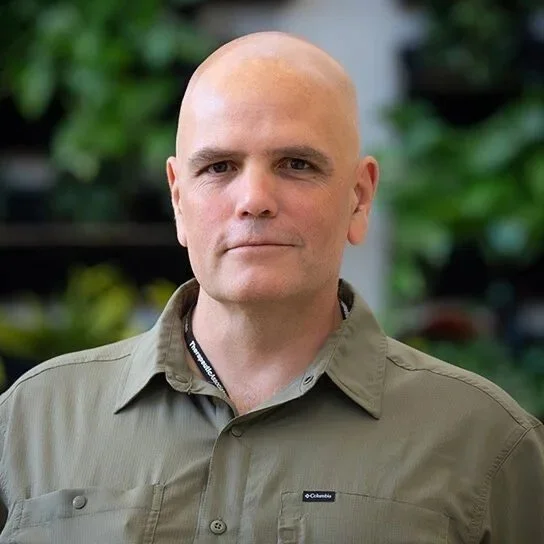
Dr. Tim Dice © Josh Foster
A Doctor of Physical Therapy (DPT) and a Certified Orthopedic Musculoskeletal Therapist (COMT), Dr. Dice specializes in musculoskeletal disorders and the treatment of joints, muscles, and connective tissues. Dr. Dice began his career as a sculptor; he leveraged his 25 years of expertise perfecting the construction of sculptures into his training in the human body's structural movement. With his focus on movement disorders, Dr. Dice is the perfect guide for helping gardeners move safely through their gardens.
THE INTERVIEW
BROOKE: A lot of your work focuses on helping people recover from injuries, but I also know you’re passionate about helping people avoid getting hurt. Do PTs regularly work with healthy patients to achieve physical goals or is this a special outreach for you?
DR. DICE: I really wish more people came to us for preventative care. Improving balance, learning safe lifting techniques, developing core and general muscle strength, and maintaining good bone health are goals that PTs absolutely can help people with before they develop a disorder that causes pain or limits function. The special outreach, such as it is, is more about getting the word out that one doesn’t need to wait until they are hurting to come in.
BROOKE: I find it’s easier to avoid activity-based injuries when I know what the common pitfalls are. What kind of garden-related injuries do you tend to see?
DR. DICE: The three most common injuries I see from gardening are the low back, the elbow, and the knee. Learning optimal movement would help to greatly reduce these injuries in gardeners.
For example, we have a natural tendency to avoid moving our feet while holding something heavy. This means that when loading and unloading things like bags of potting soil in our vehicles we tend to stand in one spot and twist through our backs rather than lifting, pivoting with our feet, and setting the load down. Twisting under load is a great way to get hurt, and I see people do it every time I am at the garden center.
Lateral Epicondylitis, commonly called “tennis elbow,” is the gardener’s over-use injury. It comes mostly from twisting through the wrist and forearm to pull weeds. A straight pull through the shoulder is a better way to go.
Gardeners tend to spend a lot of time on the ground. Getting up and down with poor body mechanics is hard on the knees. Using knee pads is great but they can’t protect you from the strains of getting up and down with bad form.
BROOKE: Are there exercises that you recommend to help prevent these common injuries (assuming clearance by the individual’s doctor, of course)?
DR. DICE: The most important tool I have for preventing injuries in gardeners is a stick. Dowel, broom handle, ski or hiking pole, something like that. Hold it so that it touches the back of your head, the space between the shoulder blades, and the tailbone, then practice bending forward while keeping the dowel in contact with all three of those points. This teaches the very important principle that the back should be braced and all the movement should come through the hips.
Once hip hinging is mastered, move on to squatting with the dowel. People of all ages and fitness levels can safely lift even heavy loads if the huge ball and socket joint of the hip, powered by the body’s largest and most powerful muscles, handles the movement instead of the small and fragile joints of the spine.
I also like rows to train the large muscles of the shoulder blades to help with movement that are too often left to the smaller muscles of the forearm and rotator cuff. Speaking of the forearm muscles, gardeners would do well to strengthen them using light weights or exercise bands. Wrist curls and wrist extensions are a good place to start.
BROOKE: What kind of physical benefit does an activity like gardening provide for us?
DR. DICE: Gardening is a wonderful weight-bearing activity to keep our bones strong. It gets us outside, makes us use all of our muscle groups. People who don’t garden tend to avoid getting up and down from the floor or ground as they get older, and this habit nearly always leads to loss of function.
Carrying tools, plants, potting soil, and so on also challenges balance and keeps that skill strong. Mostly, though, gardening stimulates the mind and feeds the soul, and that always has a physical benefit.
BROOKE: Is there anything specific that may be a warning sign for younger gardeners that they shouldn’t ignore?
DR. DICE: Never ignore elbow pain or hope that it goes away on its own. Younger gardeners are just as prone to tendinopathies like tennis elbow (Gardener’s Elbow?) as older people. When inflammation gets into a tendon it tends to stay there and cause trouble whether it is causing pain or not. Resting your way out of elbow pain is not a good strategy since it tends to keep coming back and tends to be worse each time.
BROOKE: For those growing their families in addition to their plants, are there special considerations for pregnant gardeners?
INTERVIEW INTERLUDE
〰️
INTERVIEW INTERLUDE 〰️
Dr. Amanda Scharen, the Clinic Director at Therapeutic Associates Queen Anne, jumped in to share her expertise for this question. As a Physical Therapist who specializes in pelvic floor care, Dr. Scharen has years of experience helping pregnant clients.
Dr. Scharen emphasized that the biggest gardening risk comes from falls or strain from bending over. If you can’t easily get back on your feet from the ground, the safe choice is to avoid deep squats or being on the ground. Instead, she recommends sitting on a stool or gardening while standing, performing tasks within arm’s reach that don’t require leaning.
INTERVIEW INTERLUDE
〰️
INTERVIEW INTERLUDE 〰️
BROOKE: Gardening can be therapeutic for people, but it can also be a frustrating experience to not be able to do activities that we previously enjoyed. For people struggling to navigate the divide between their gardening goals and their current injury limitations, how do we bridge that gap?
DR. DICE: This frustration sits at the heart of all rehabilitation medicine. Every patient wants to get back to the things they love. Missing out on ski season, not being able to take a planned hiking vacation, taking time off from the gym, not being able to take care of our gardens the way we want to are common themes in the PT clinic.
I have a few avenues of approach with my patients:
Modification: What changes can be made in the way you move, what simple tools can keep you in the garden, what strategies can conserve strength, limit exposure, and avoid symptom aggravation?
Substitution: While working to get back to gardening without modifications, what complementary activities might keep you active, get you outside, and help reach your rehabilitation goals.
Mindset: Sometimes we just need to accept that rehabilitation takes time. Tending our body and tending our garden are both practices of patience and consistency.
MY FAVORITE TAKEAWAYS
A huge thank you to Dr. Dice and Dr. Scharen for sharing their time and expertise! There were lots of insightful moments in the interview, but here are my personal favorites:
Protect your spine. Be sure to hinge from the hips and not arch your back.
Remember to move your feet instead of twisting or leaning to reduce injuries and falls. This applies to everyone, but especially people carrying heavy loads and pregnant gardeners.
Getting up and down from the ground is an important skill to maintain function. Protect your knees with proper form though and don't go to the ground if you can't safely and reliably stand back up!
Don't ignore pain and just hope it'll go away. Listen to your body's "Check Engine Light" and get professional help to make sure injuries don't get worse.
"Tending our body and tending our garden are both practices of patience and consistency."
What insights stood out to you? Is there anything you'd like to learn more about? Send me a note and let me know. Happy gardening!