
Going Green for St. Patrick’s Day
The buds on my plants are finally going green so it's time for us to go green too! To celebrate St. Patrick's Day, I've put together this list of 3 beginner-friendly ways to go green in your garden. These eco-minded, approachable ideas are sure to bring good luck to your garden this year!
COMPOSTING
Composting is a great way to recycle food waste on-site and bring nutrients and organic matter into your garden for free! Most simply, compost is the product of biodegradable materials breaking down. Composting at home involves optimizing the system to speed up the process so you can use the compost to feed your garden.
This may sound complex, but it just comes down to a 3:1 ratio of "brown" materials to "green materials" plus air and moisture. "Browns" are carbon-rich materials like dried leaves, shredded cardboard, and paper; "greens" are nitrogen-rich materials like fruit and vegetables scraps and grass clippings. There are many compost systems, but I'm sharing the ones I've personally used.
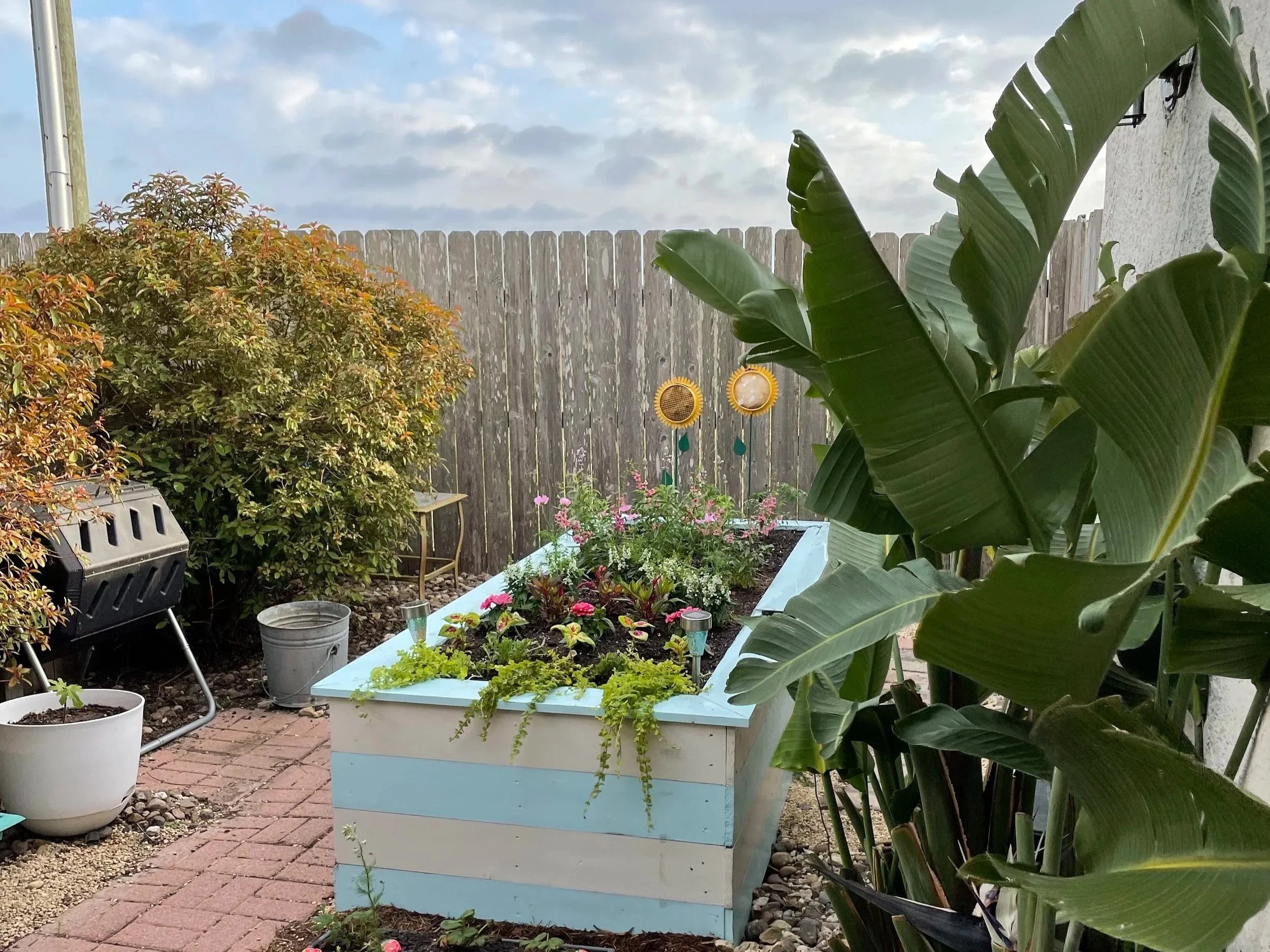
Compost Tumbler in the Shrubs
I use a compost tumbler in my garden. This is an elevated sealed rotating bin. It's more accessible for loading and turning the pile for the necessary aeration, but prevents animals from accessing the compost. My current tumbler is almost 6 years old and survived a cross-country move so it's been a solid investment for my garden. When it's time to unload the compost, I set a tarp under the tumbler and dump everything out onto it. Traditional open compost systems may be easier to access, but they're also easier for critters to access. The tumbler wins in my book for its compact size, tidiness, and pest resistance.
Vermicomposting is a method of composting that uses worms to break down the food scraps. These aren't just regular earthworms you find in your garden. Compost worms live in the top layer of the soil as detritivores, eating decaying plant material. They love to eat your kitchen scraps and turn it into garden gold. This process doesn't smell, so it's a great option for apartments or smaller spaces. It's a fun science experiment for kids as well!
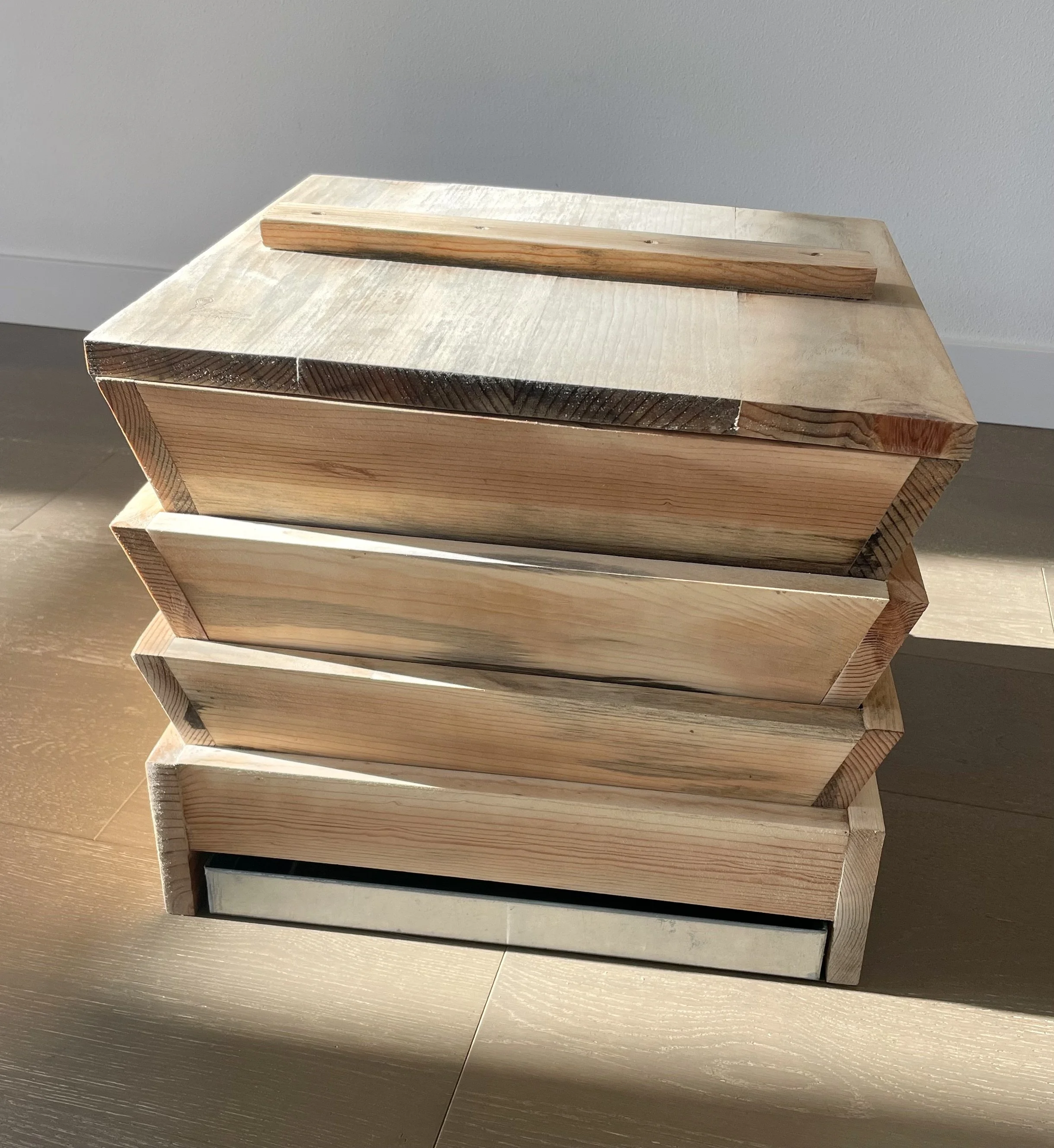
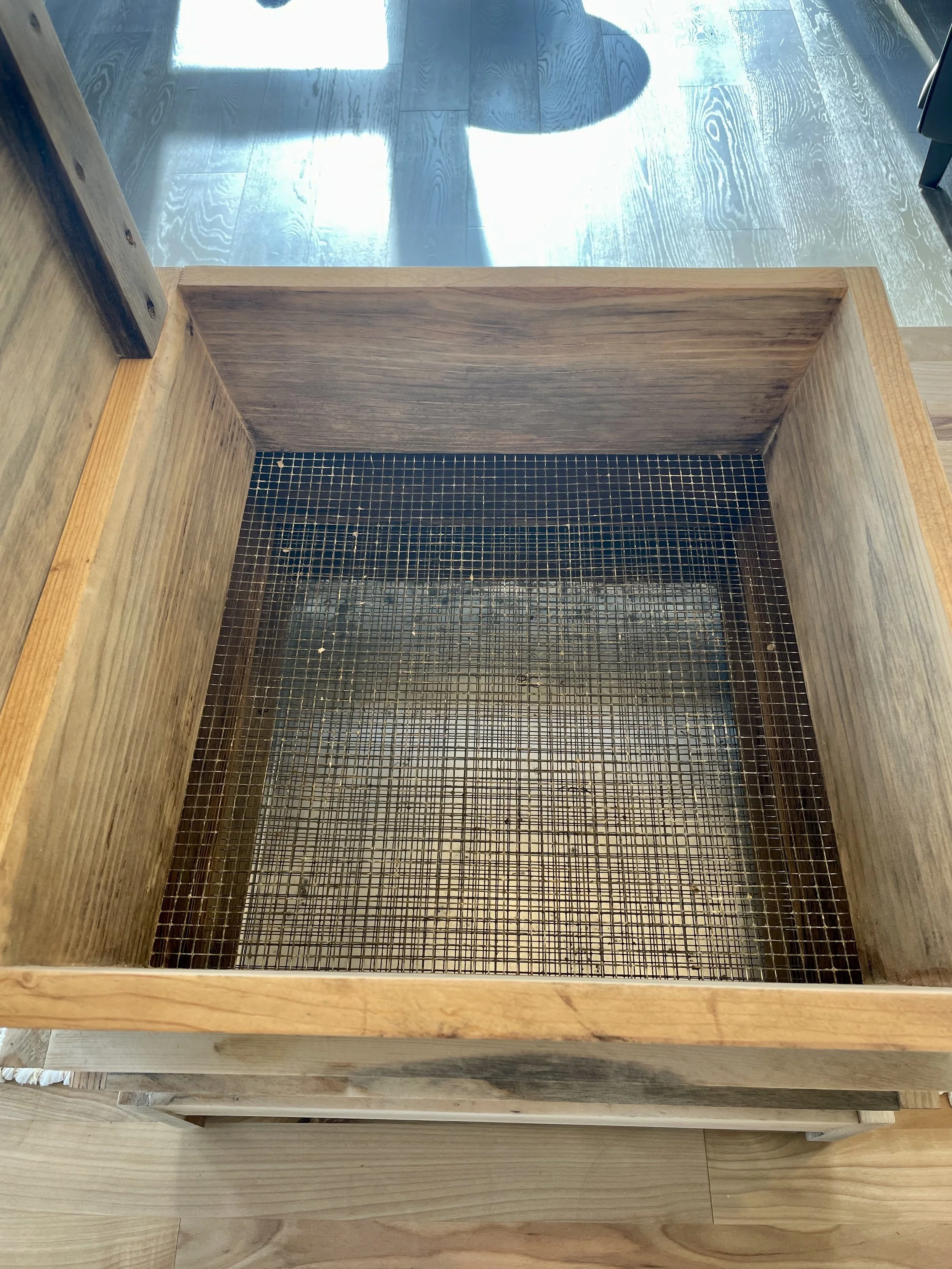
I had a wooden stacking worm bin in an apartment, but there are a lot of different options. You can pick from stacking systems, bucket systems, in ground systems, and tower systems. People have even DIYed vermicomposting systems from rubbermaid bins. I ordered my worms from Jim's Worm Farm, but there are many options for sourcing your compost worms. You don't need to invest in thousands of worms either. Happy worms reproduce quickly so you will soon have a small army of worms handling your kitchen waste!
With this variety of composting methods, you can find an option that works best for your budget, space, and lifestyle. Composting helps close the waste loop and returns nutrient cycling back to your garden.
MULCHING
Mulching is an easy way to go green that helps the environment in several ways! Mulching is the act of putting organic or inorganic material around plants. I find inorganic mulch, such as rocks or plastic, to be problematic (heat management issues, no nutrient add, difficult to weed or change bed design) so I'm focusing on organic mulches, such as bark chips and wood mulch.
You can get bagged mulch or order it in bulk. ChipDrop is a company that connects gardeners with local tree companies that need to empty their trucks. It's an option to get free wood chips if you don't mind the uncertainty of delivery timing and you have the space for them to dump an entire truck's worth of mulch on your property. It could be an opportunity to connect with gardening neighbors because there will be more than enough mulch to share!
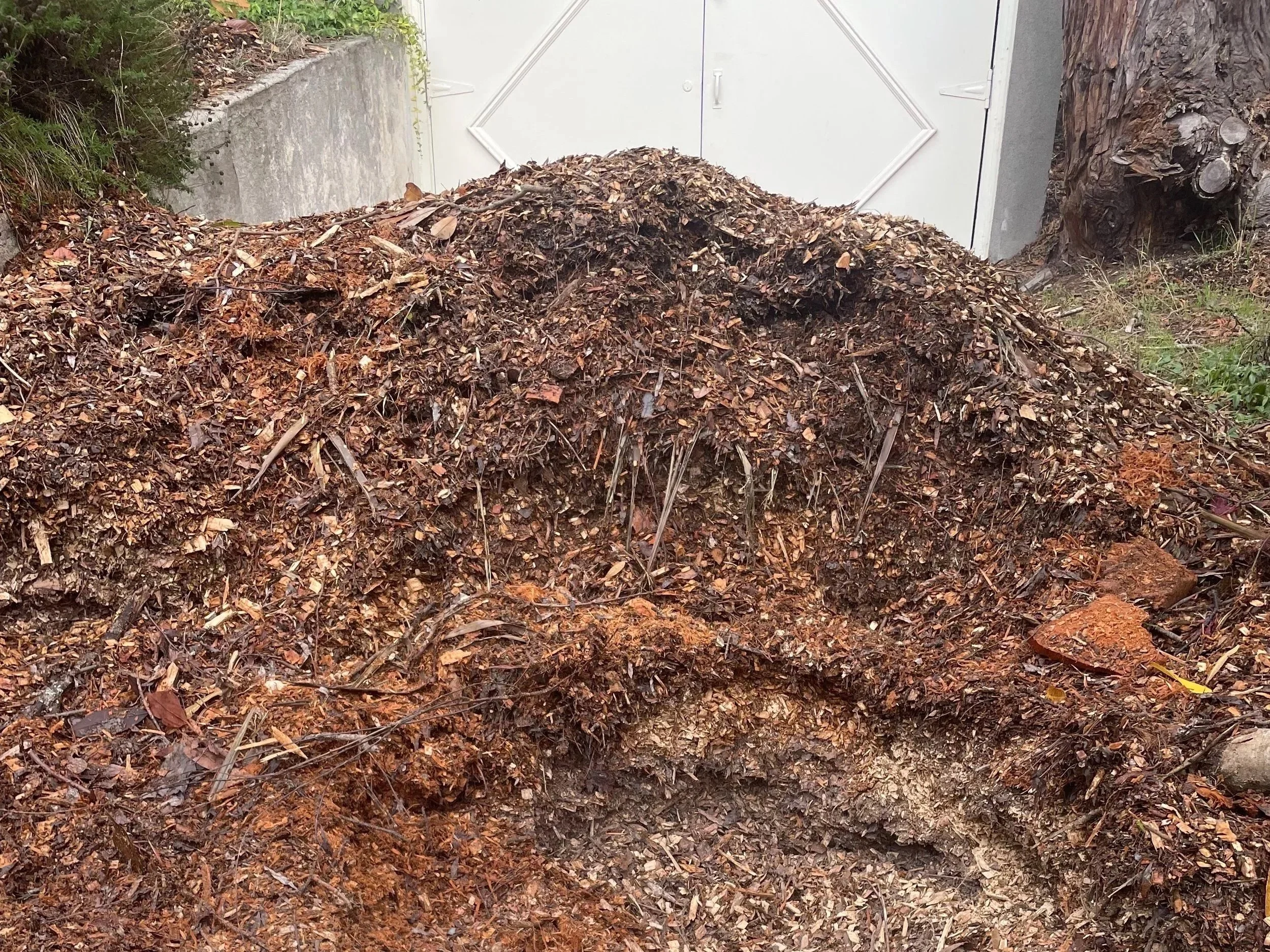
ChipDrop Pile Filling Driveway
So how does mulching actually help the earth? Mulch retains moisture and helps insulate plants so you can save water. Not everyone can install rain gardens or water catchment systems to improve our water usage in the garden, but everyone can mulch.
Mulching also helps lower herbicide use. The phrase "nature abhors a vacuum" is popular in gardening circles. Essentially, this means that nature wants to fill empty spaces. It's how the system works: there's some sort of disruption, first succession plants show up to make the soil more hospitable for other plants, and nature grows from there. Mulching helps minimize the germination rates of these first succession plants that are trying to fill up your garden beds. This means less weeding for you and hopefully no herbicide use that can contaminate our waterways.
Mulch brings organic matter into our gardens as well. As it breaks down, organic mulch feeds the soil and supports our detritivores (shoutout to our worm friends from earlier), who in turn incorporate that organic matter into our soil. This improves soil structure quality and water retention capabilities, lowering reliance on chemical fertilizers and public water utilities.
Finally, mulch serves as "cues to care," an obvious sign to passersby that your garden bed is designed and intentional. In neighborhoods with HOAs or grass lawn monocultures, mulch is the pretty bow on top of your garden gift that signals maintenance. Because of this, mulch can help people be more accepting of native plants because the garden beds still look well manicured. Mulch with a clean border edge helps grow our gardens from grass lawns into a planted ecosystem that supports pollinators and wildlife.
Mulch is a powerful tool in your garden, but make sure you apply it properly so it doesn't cause problems for you down the road. You typically want a depth of 2 to 3 inches. Any deeper can lead to anaerobic conditions and water impermeability. If the mulch depth is correct but you want to freshen up the look of old mulch, try raking it first before buying more mulch.
Also, avoid any mulch volcanoes! We don't want to build up mulch at a plant's base. This can trap moisture against the plant stem and lead to disease and rot. Especially for trees, pull the mulch about a foot away from the trunk to keep that root flare healthy.
NATIVE PLANTS
If you can plant an ornamental or edible plant, you can grow native plants. In fact, they may be easier for you to grow because they evolved to be acclimated to the conditions of your area. This typically means less inputs are needed from you for them to thrive! Native plants help the ecosystem. Because they're happy in their native environment, they traditionally need less water and chemical management from gardeners.
Additionally, native plants support the animals that co-evolved with them. Entomologist and ecologist Dr. Doug Tallamy has written numerous books about this relationship. Check out the link to his books on my Resources Page or explore his website (linked below) if you want to learn more about the science of native plants' role in the ecosystem.
Put simply, native plants support the insects that underpin the entire ecosystem. Insects pollinate the majority of plants (like the food we eat), decompose plant and animals to manage waste, and serve as a food source for many animals. We need insects for our survival. Native plants help us support insects, ensuring they can continue doing the heavy lifting for our environment.
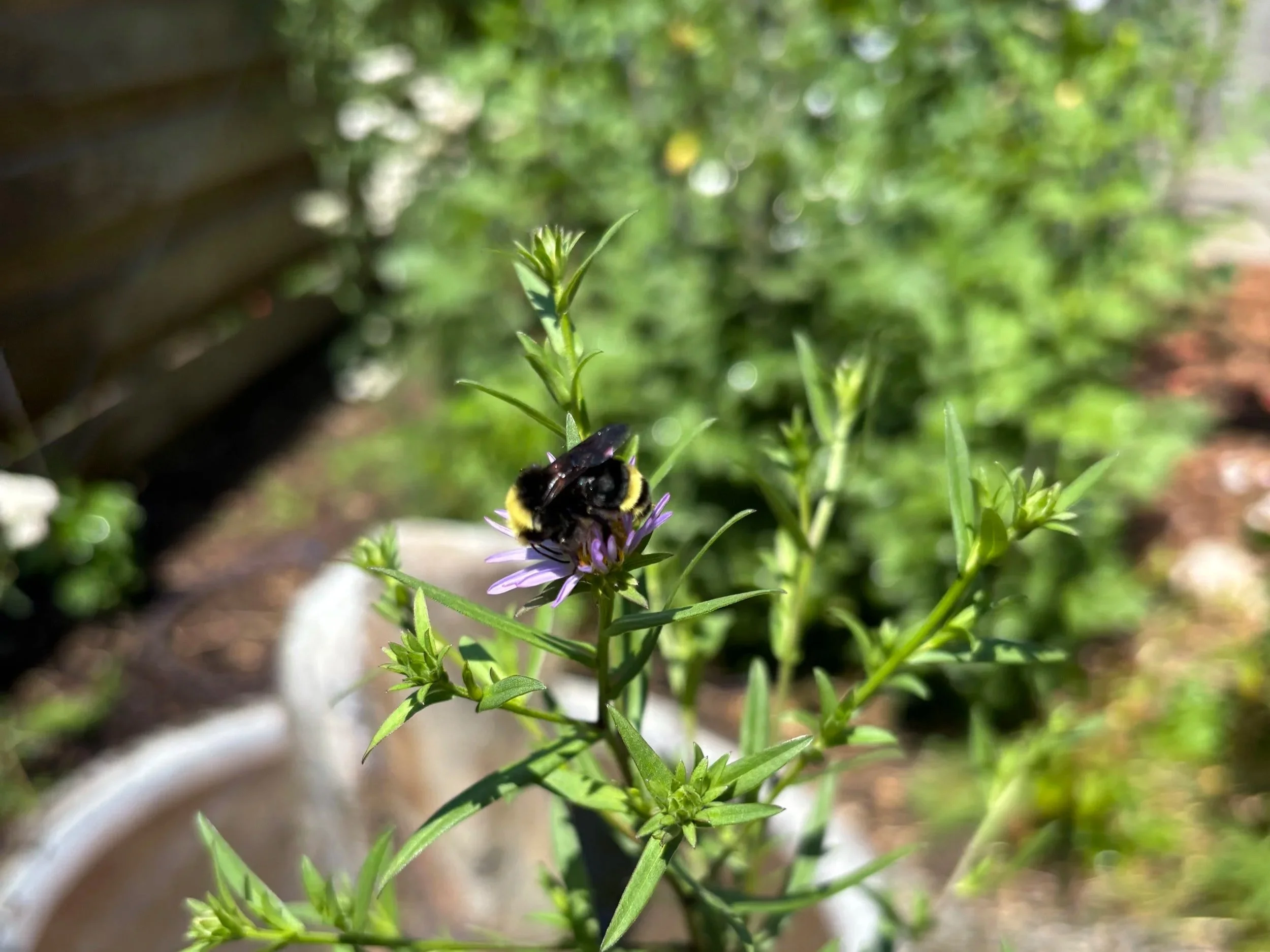
Bee on Native Douglas Aster
I hope you get a chance to try composting, mulching, and native plants this year. If you have any other fun ways of going green in your garden, please send me a message! I'd love to hear from you.
While this year may bring ups and downs, may your garden be the pot of gold waiting at the end of the rainbow for you! Happy gardening!