
Hostess with the Mostess: A Garden Party with Host Plants
Butternut squash, eggs, butter, brown sugar, pecans... I have doublechecked my grocery list at least 3 times now. I keep running through my order, not quite sure what I’m expecting to find missing, but it’s our first time hosting Friendsgiving at our home and I want it to go perfectly. Is perfect host pressure a common feeling this time of year?
The holiday season ushers in memories of togetherness and anticipatory merriment, in addition to the pressure to make the festivities as fulfilling as possible. For those of us with loved ones across the country, it makes complete sense to want to maximize our short time together.
HOSTING NATURE AT YOUR HOUSE
I feel a similar pull in my garden as I try to make it the perfect hangout for nature. For a lot of wildlife, there is a short window of time to help them thrive. I want to be “hostess with the mostess” for my garden friends!
Host plants are a great way to support the native ecosystem. Over thousands and thousands of years, wildlife have formed specialized relationships with particular plant species. Most generically, a host plant supports the life cycle of an animal. While other animals can have host plants, we typically think of host plants in regards to insects. A common example of a host plant relationship people may recognize is the Monarch Butterfly and Milkweed.
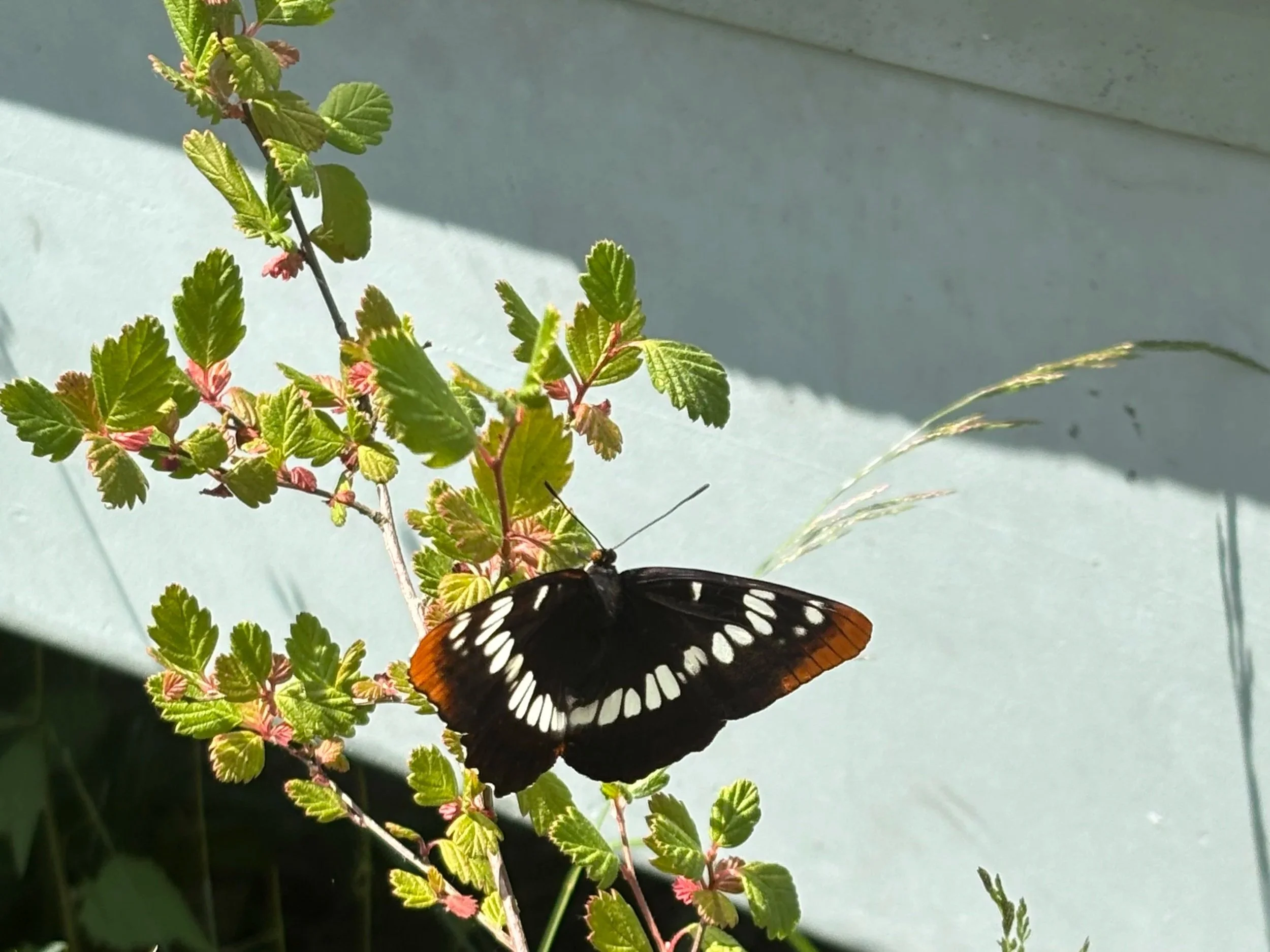
Adult Lorquin’s Admiral Butterfly on Host Plant Ocean Spray (Holodiscus discolor)
THE BUTTERFLY EXAMPLE
While I’ve used the generic definition of “supporting an animal’s life cycle,” it’s important to understand the actual role of the plant in this process. Let’s break down the life cycle of a butterfly to understand the interaction with its host plant.
ONE: EGG STAGE
The first stage is the butterfly egg. The egg is laid on a host plant by the parent butterfly so that it has access to food the moment it hatches.
TWO: LARVAL STAGE
The next stage is the caterpillar, which emerges from the egg. This is also called the Larval Stage. The larva (aka caterpillar) needs to eat a lot of food to support this stage. Caterpillars have co-evolved with their host plant to get maximum nutrition from the plant. This is important because caterpillars can grow up to 100 times their original size! Thanks to the host plant, the caterpillar should have easy access to the nutrients it needs to continue to the next stage.
THREE: PUPA STAGE
The Pupa Stage occurs once the caterpillar has matured and enters its chrysalis to begin its transformation. This stage can last from weeks to months, depending on the species. The chrysalis formation typically happens on the host plant or on nectar-rich native plants.
SIDEBAR: CHRYSALIS VS COCOON
You may be more familiar with the term cocoon, which is used colloquially to describe the caterpillar casing. However, chrysalis is the term for a butterfly caterpillar and cocoon is specific to moth caterpillars. They’re similar concepts, but a butterfly chrysalis is a hard smooth exoskeleton covering while a moth cocoon is a silky wrapping. There are a lot of cool differences between the two, but both serve similar purposes in protecting the caterpillars as they pupate into adults.
FOUR: ADULT STAGE
The butterfly emerges from its chrysalis in its mature form. While some butterfly species don’t eat in their adult stage, most butterflies need fuel to find a mate and lay their eggs. Some caterpillar host plants also act as nectar plants for the adult butterflies. Thanks to their wings, butterflies are able to travel and (hopefully) find a variety of nectar-rich plants. They then continue the butterfly life cycle by laying their own eggs on appropriate host plants.
WHAT TO EXPECT WHEN YOU’RE EXPECTING: HOST PLANT EDITION
Expectation management matters when we introduce people to the concept of host plants. A common misunderstanding is the assumption that host plants are just pretty flowers for grown butterflies—a nectar plant. However, we can see from the previous butterfly stages that host plants are a lot more than that. They’re egg nurseries, an "all you can eat" buffet for hungry hungry caterpillars, and a chrysalis shelter.
For those expecting plastic-perfect plant beds, a host plant can seem like a gardening failure. When it’s functioning properly in the ecosystem, a host plant should be covered in caterpillars doing their best to skeletonize it. While I’m personally grateful when a herbaceous perennial gets eaten and can be removed from my clean-up list, this can be unappealing to those who just expected these plants to bring in swaths of beautiful butterflies bouncing around their flowers. However, you can only enjoy the adult stage of the butterfly though if you allow the previous butterfly stages to occur.
PEST OR POLLINATOR
I was volunteering at a garden help booth at a farmer’s market when a man approached me with a plant problem. He was very concerned that he had gotten defective plants. He told me that they were supposed to support pollinators, but that he had seen zero butterflies in his garden this year. The plants themselves looked very healthy though.
He then shared that he was worried that the pests he had seen on the plants earlier in the season had damaged them somehow and kept the butterflies away. After asking more questions about these “pests,” I was told about egg clusters and tiny grubs on leaves that had been destroyed. Unwittingly, he had squashed the butterfly eggs and killed any surviving caterpillars that had hatched on his butterfly host plant.
The farmer’s market man was so upset when I explained what had happened. Understandably! He went out of his way to purchase plants to help the pollinators. But no one ever explained how these plants help pollinators. He spent time and money “protecting” these plants because he thought he was helping. I sent him on his way with a list of insect identifier apps and the reassurance of future butterfly friends.
HOSTING HOST PLANTS IN OUR GARDENS
By learning about animal life cycles and their interaction with host plants, we can better understand how to incorporate these plants into our gardens in ways that work for us as well. The best host knows how to throw a great party that they also get to enjoy.
Maybe you have a little one who would love to count caterpillars as they munch on their host plant or monitor chrysalises hanging from leaves. If so, accessibility is key. Setting host plants by walkways or in the front of garden beds near a patio could work well for you.
Or maybe you enjoy throwing parties in your backyard and have concerns about the aesthetics of a skeletonized plant right next to your barbecue. Host plants tucked further into garden beds can be shielded by other plants. Beautiful views for you and the caterpillars!
May this holiday season find you surrounded by love and light as visions of caterpillars dance in your head. Happy gardening!
RESOURCES
North American Butterfly Association - Host and Nectar Plants
Peggy Notebaert Nature Museum of the Chicago Academy of Sciences - What are Host Plants?
Garden for Wildlife - Keystone Native Plants for Pollinator Paradise
Garden For Wildlife - Native Plants for Every Stage of a Butterfly’s Life Cycle
The Academy of Natural Sciences of Drexel University - Butterfly Life Cycle
IFAS Extension - Why Host and Nectar Plants Matter for Butterfly Gardening