
The Grief Garden
Nana isn’t dead in my garden. She ambles beside me, her red suede flats matching her bright red artist glasses - one lens round and the other square. The monotonous task of weeding conjures memories of deadheading the daisies in her garden. Nana rests in her wrought iron patio chair while I tackle the daisies. The Kentucky humidity clings to our faces as we talk about her garden plans - refreshing her raised vegetable beds, trimming her beloved fig trees, adding a wildflower strip to the back alley.
She obsessed about that wildflower bed. For months, I received updates. She had rototilled the bed. She had bought worm castings for the bed. She had bought garden soil for the bed. She had picked the rocks out of the bed.
FLOWER AFFECTION
I told her that wildflowers are first succession plants, the first ones to show up to a disturbed site to rewild it. They actually prefer poor quality soil and low nutrients. They don’t need to be babied.
But she poured all her love and care into that little alley garden bed. She wanted it to be beautiful. The neighborhood children had started riding their bikes through the paved back alley and she wanted to make it nice for them. The children needed wildflowers.
I got the same updates every phone call. Nana would sit in her garden and listen over her fence to the children laughing and playing. She loved to hear them as she worked in her flower beds.
Gardening can be seen as a solitary activity, but creating beauty is an act of love for the people around you. There’s community in this, even in solo gardening. It brings us closer to each other and to the earth. We sow a seed, building life where there was none before. We plant our legacy and a better future for the generations that follow us.
SOLACE IN SEEDS
The day Nana died, I pulled weeds in the pouring rain until my fingers were too cold to grab the wayward seedlings. The garden was a safe place to grieve. The plants won’t judge you. But more than this, the seasonal cycle of life and death in the garden feels comforting compared to generic existential dread.
When I flew to Kentucky, I sorted Nana’s garden. I straightened up her potting soil bags, organized her collection of planters, recycled dead plants to the compost. In her garage, I found a pile of cut hydrangeas from her garden that she had dried for an art project. I gathered up all the dried blooms and arranged them in a metal obelisk in her garden. Nana would want her garden to be beautiful for us.
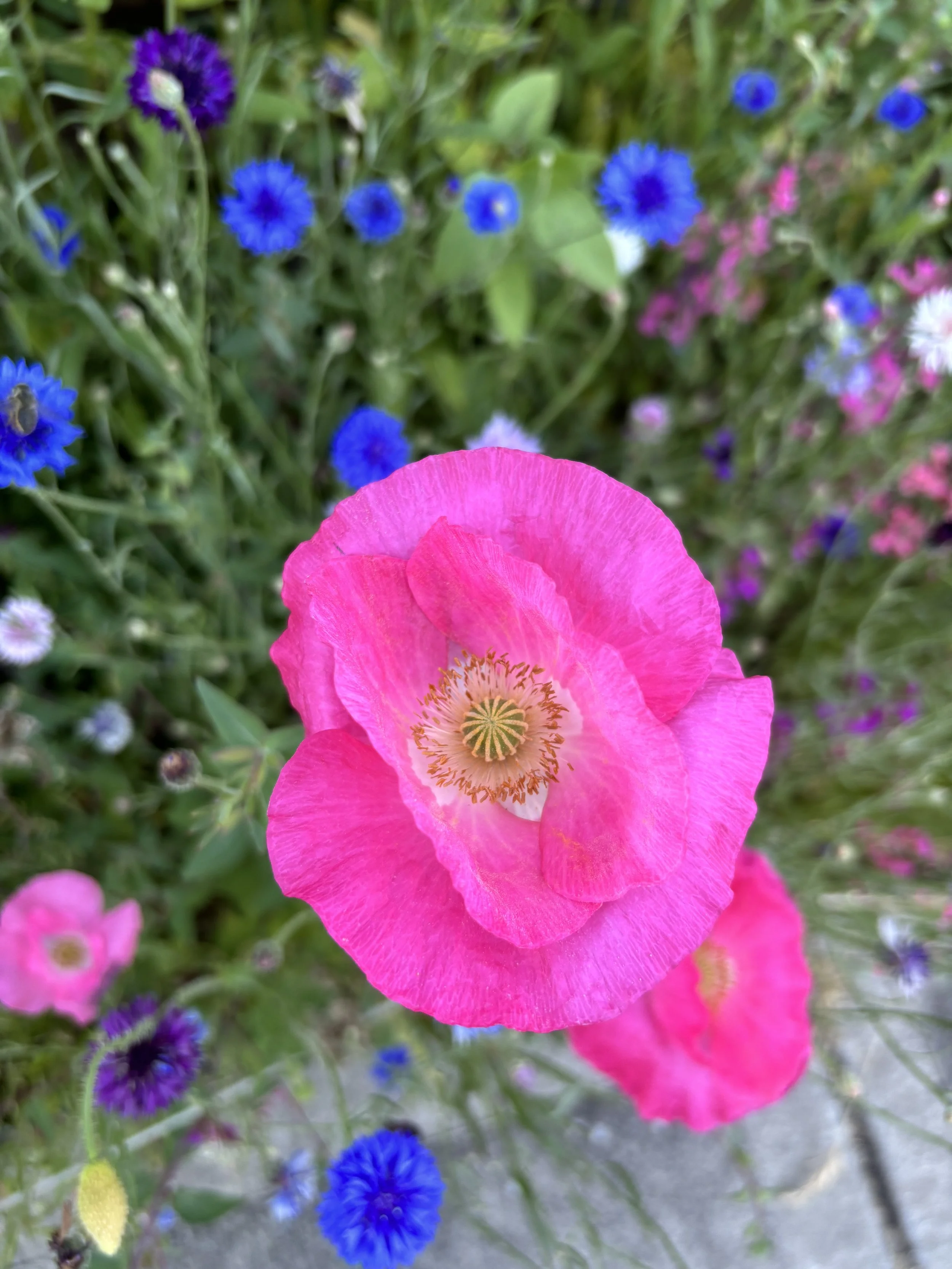
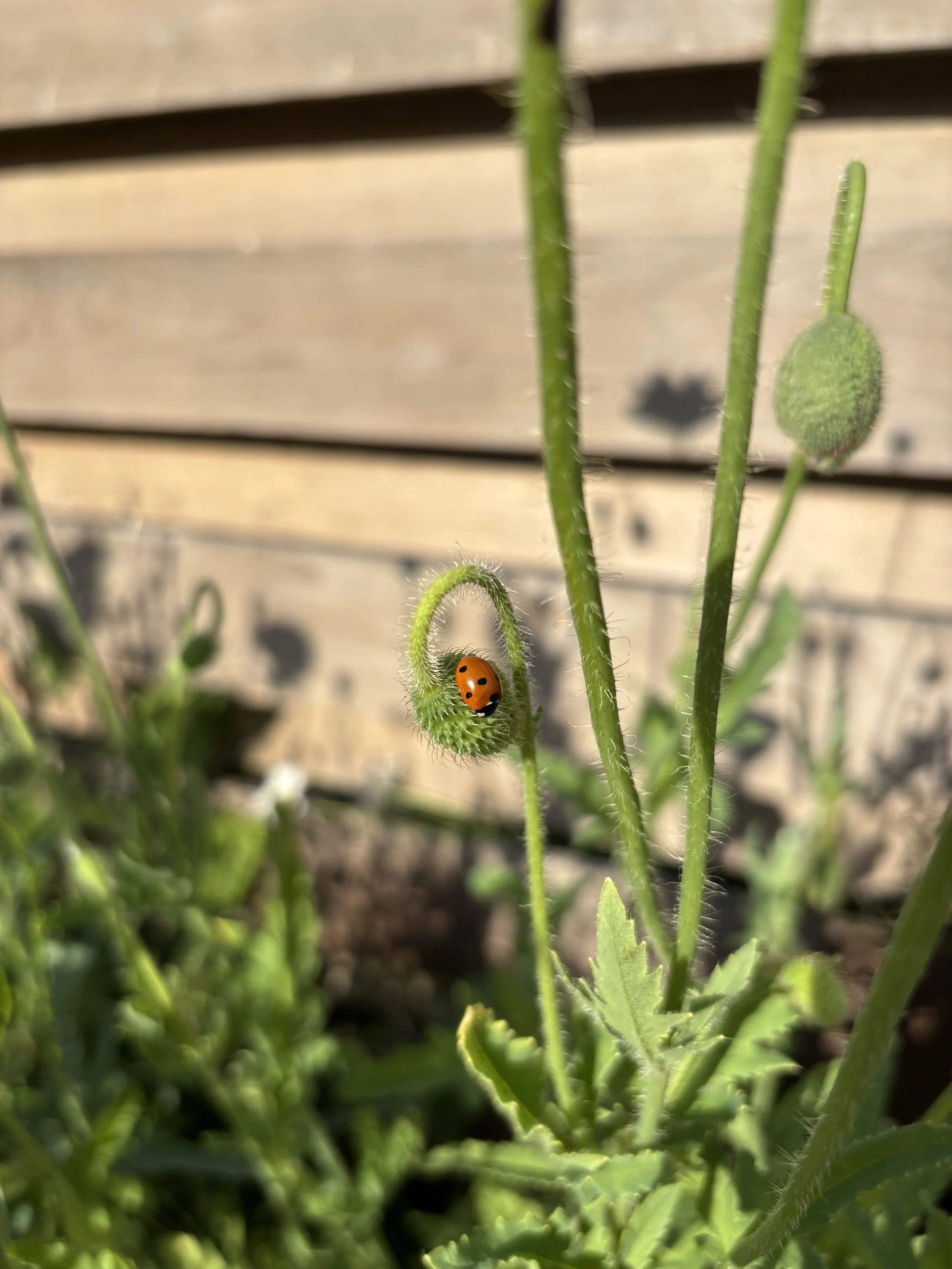
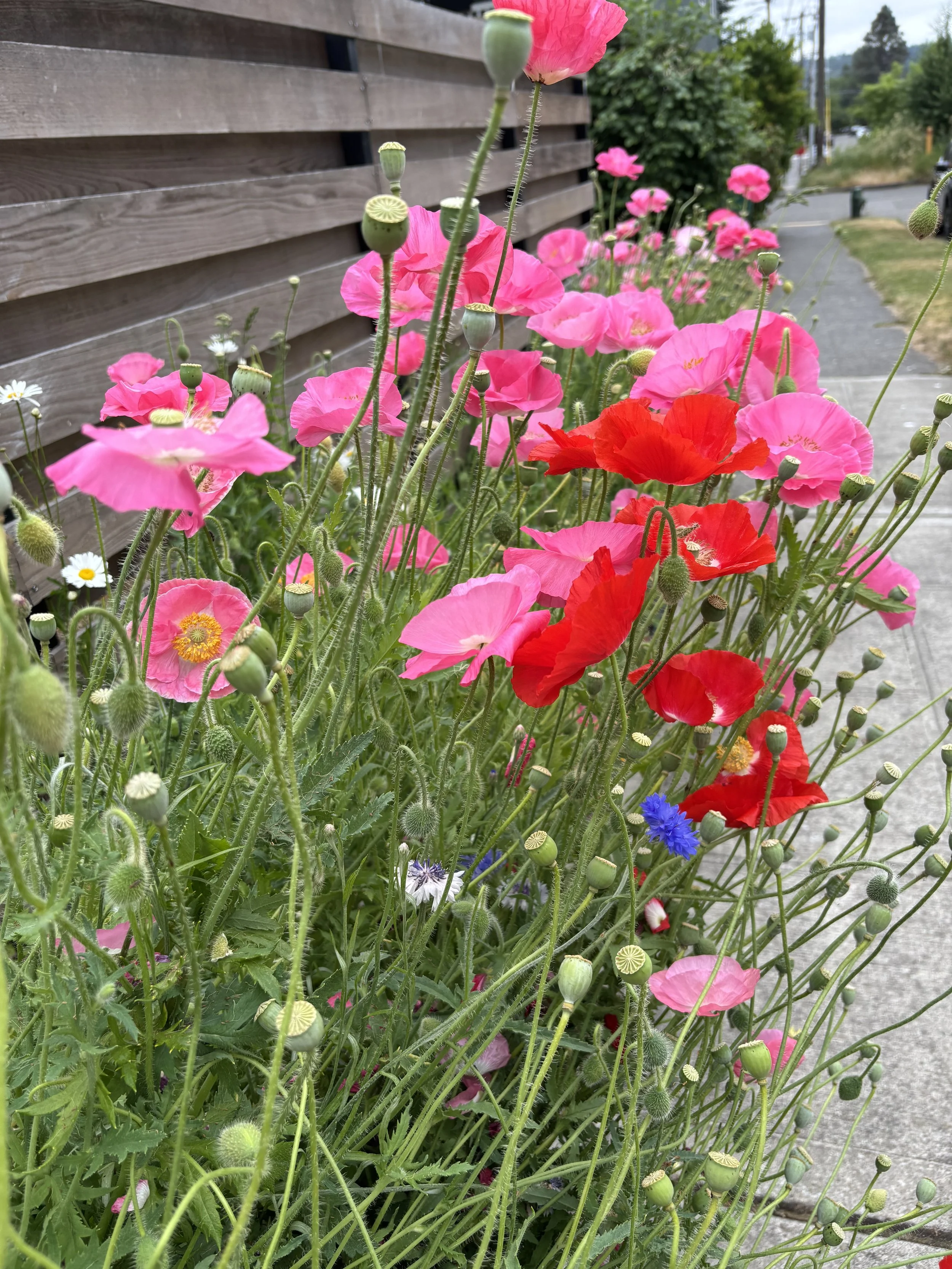
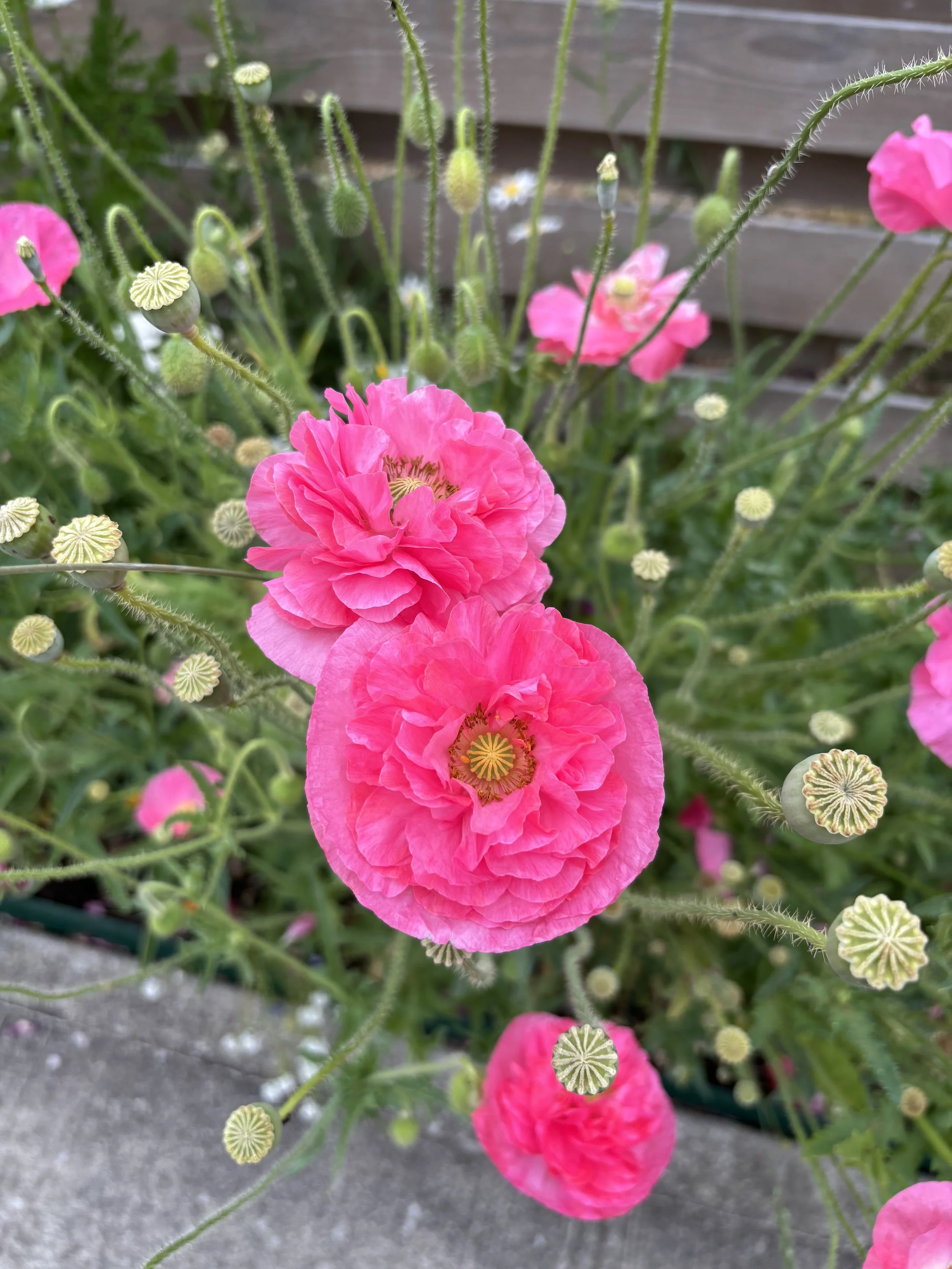
I found Nana’s seed bin on a cart in her garage; I brought her packets of wildflowers home with me. Normally, I try to mostly plant natives, but I made an exception. I now have a strip of assorted wildflowers along my sidewalk for the children in my neighborhood. People stop me to share how much they love the flowers and I feel Nana smiling through their words.
A BLESSING THROUGH BLOOMS
These plants may be annuals, but our love for each other is perennial. I see Nana’s favorite flowers and feel her with me again. This is our garden.
For those of you currently tending a grief garden, I hope you grow love there. May the memories be kind, the garden activities grounding, and the flowers wild.