
The Caterpillar Conundrum
While thinking through the best way to start this post, I stared out my living room window onto my native pollinator meadow. What had previously been a lawn too weedy to call grass has been transformed into massive towers of lupine thanks to a seed mix from Northwest Meadowscapes. It’s now buzzing with activity - fuzzy bumblebees with bright orange pollen pants, glossy ladybugs, insects so small that I can’t tell if they’re bees or flies visiting the flowers.
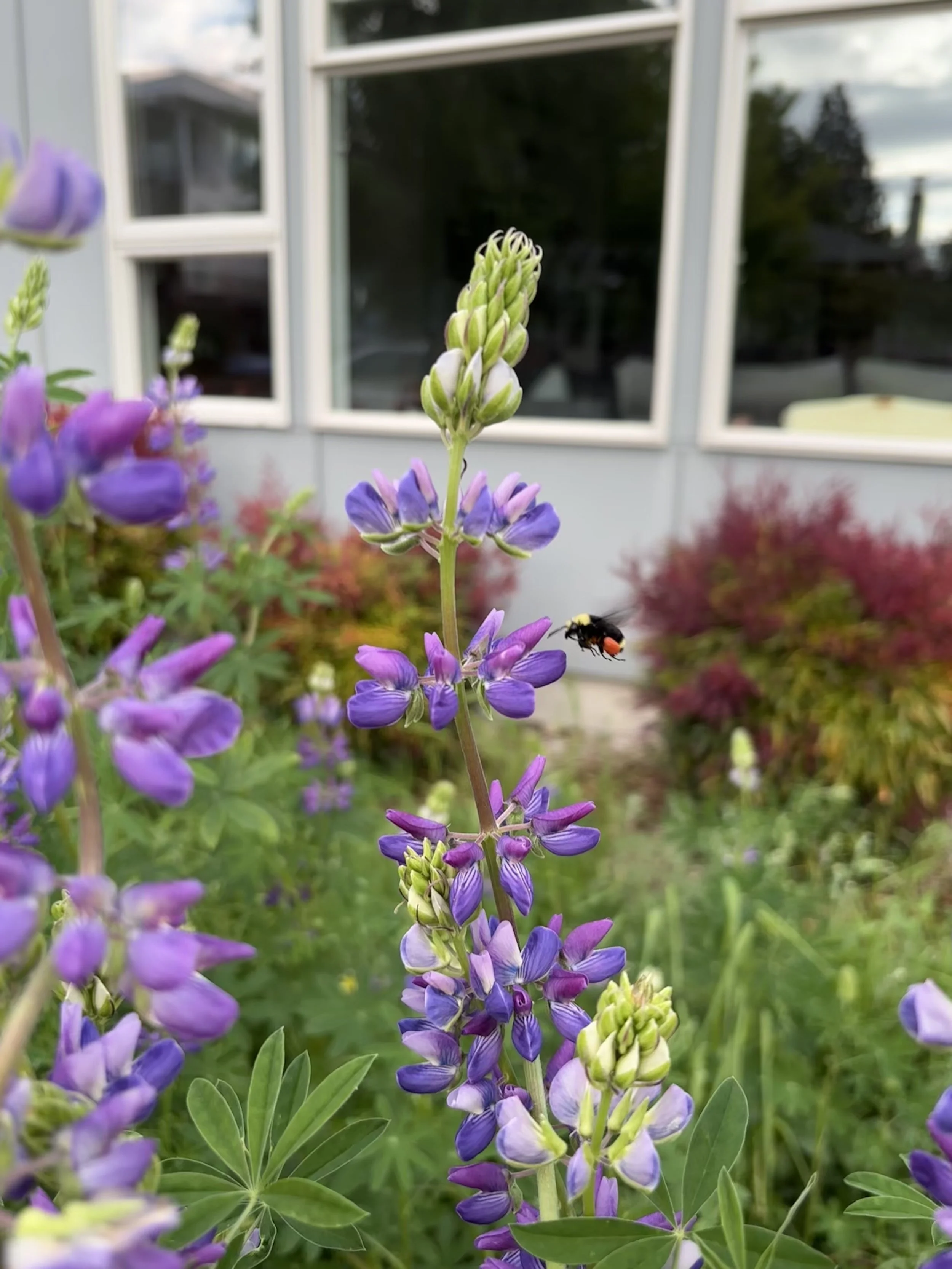
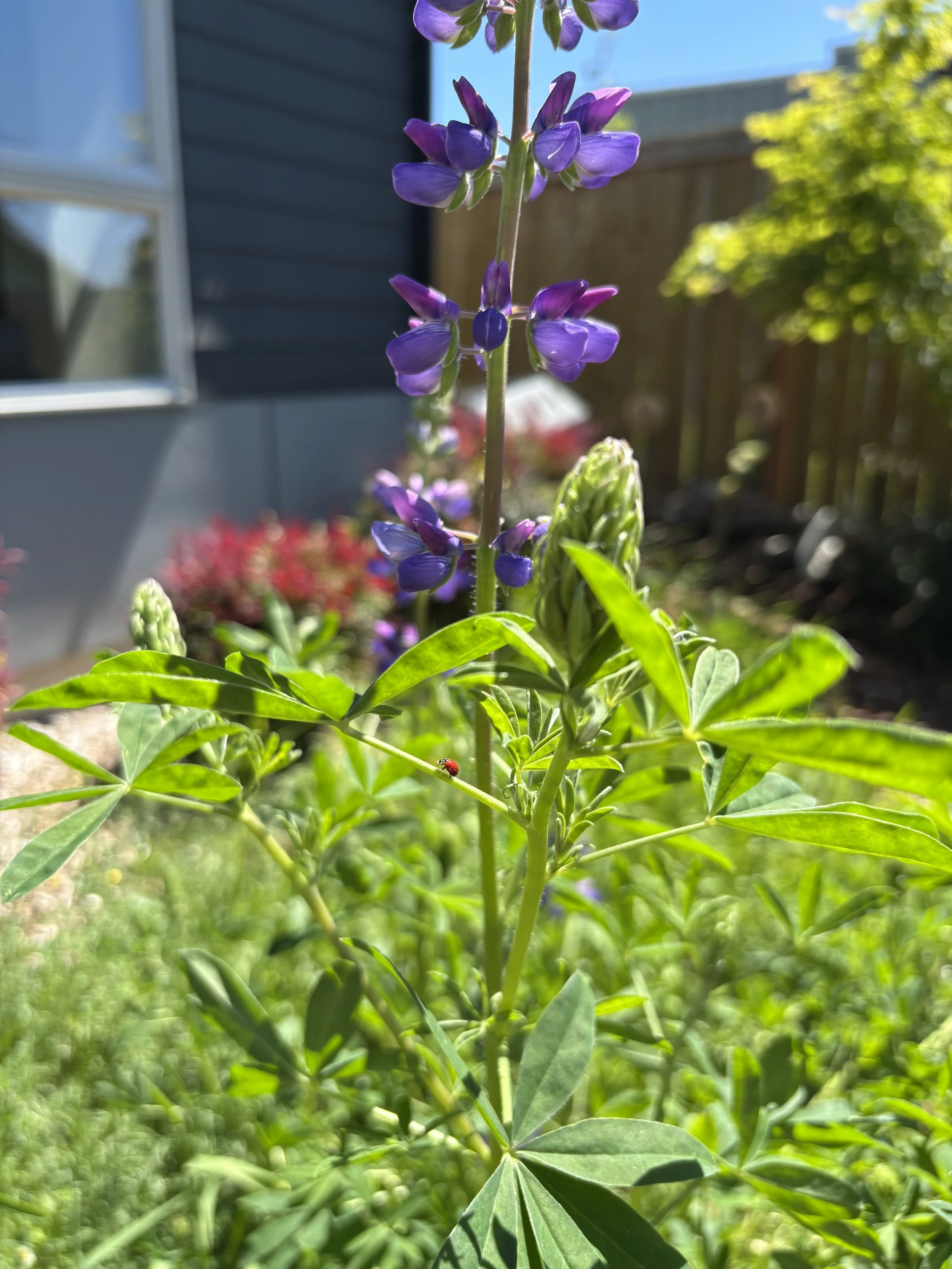
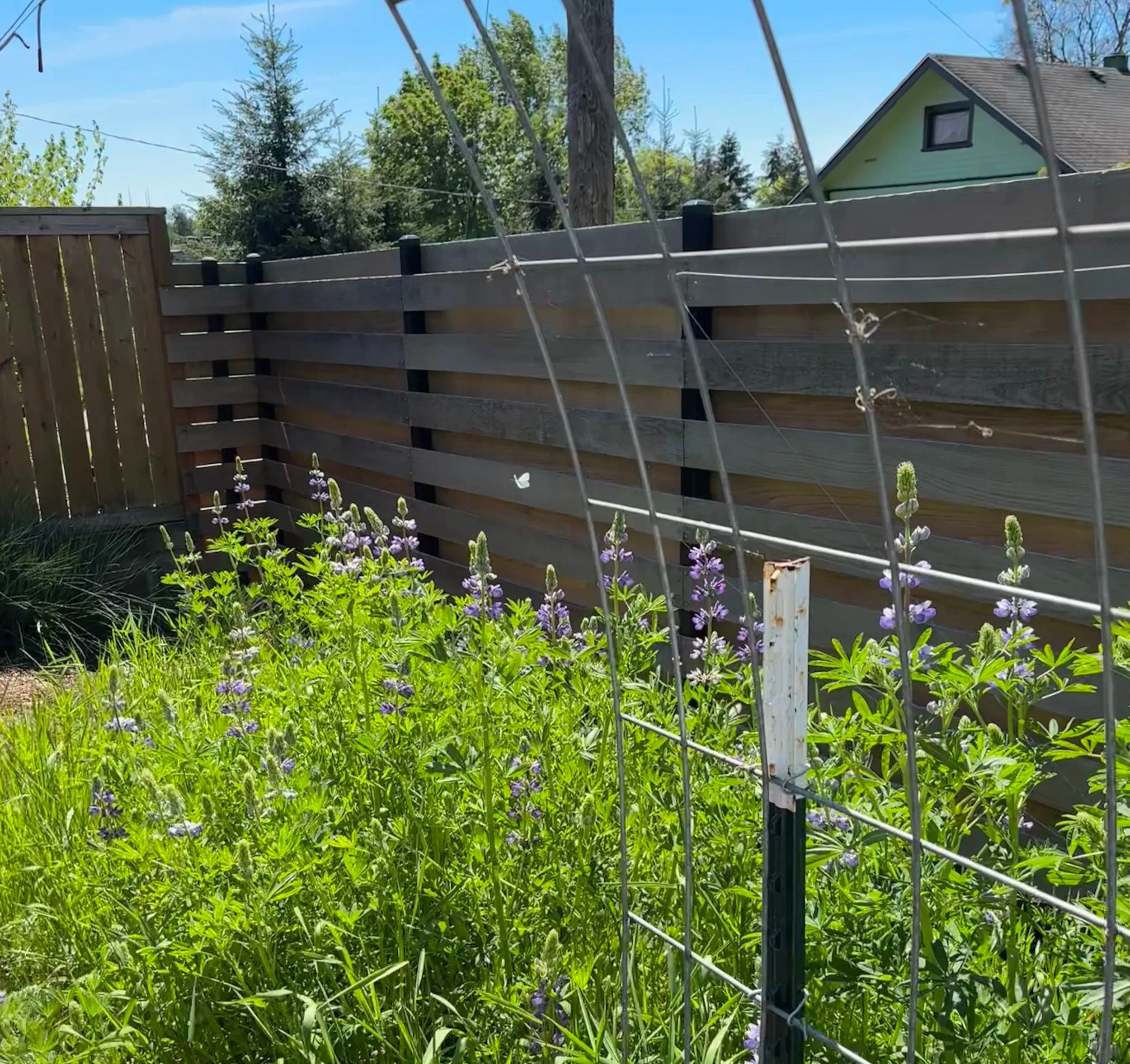
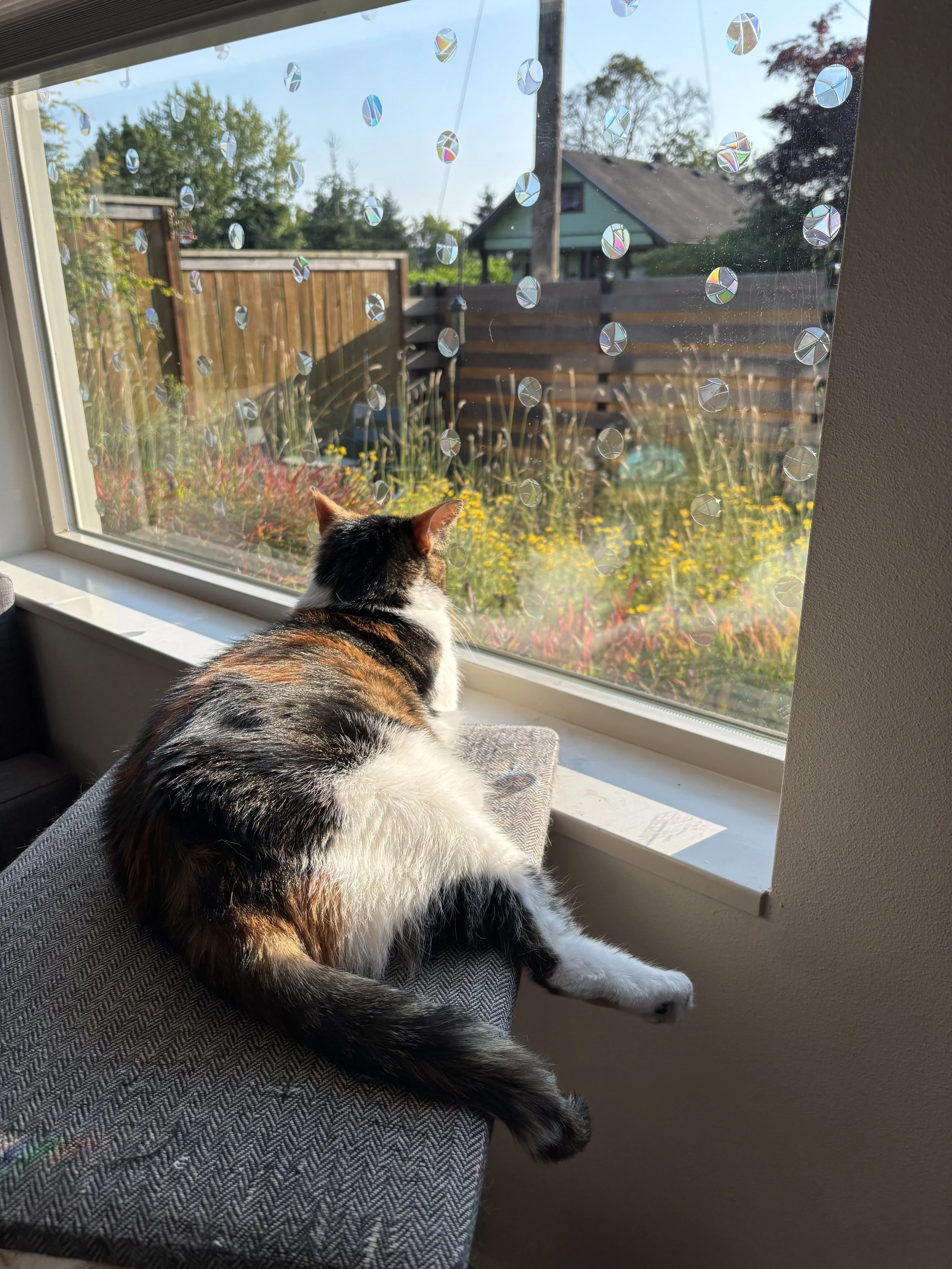
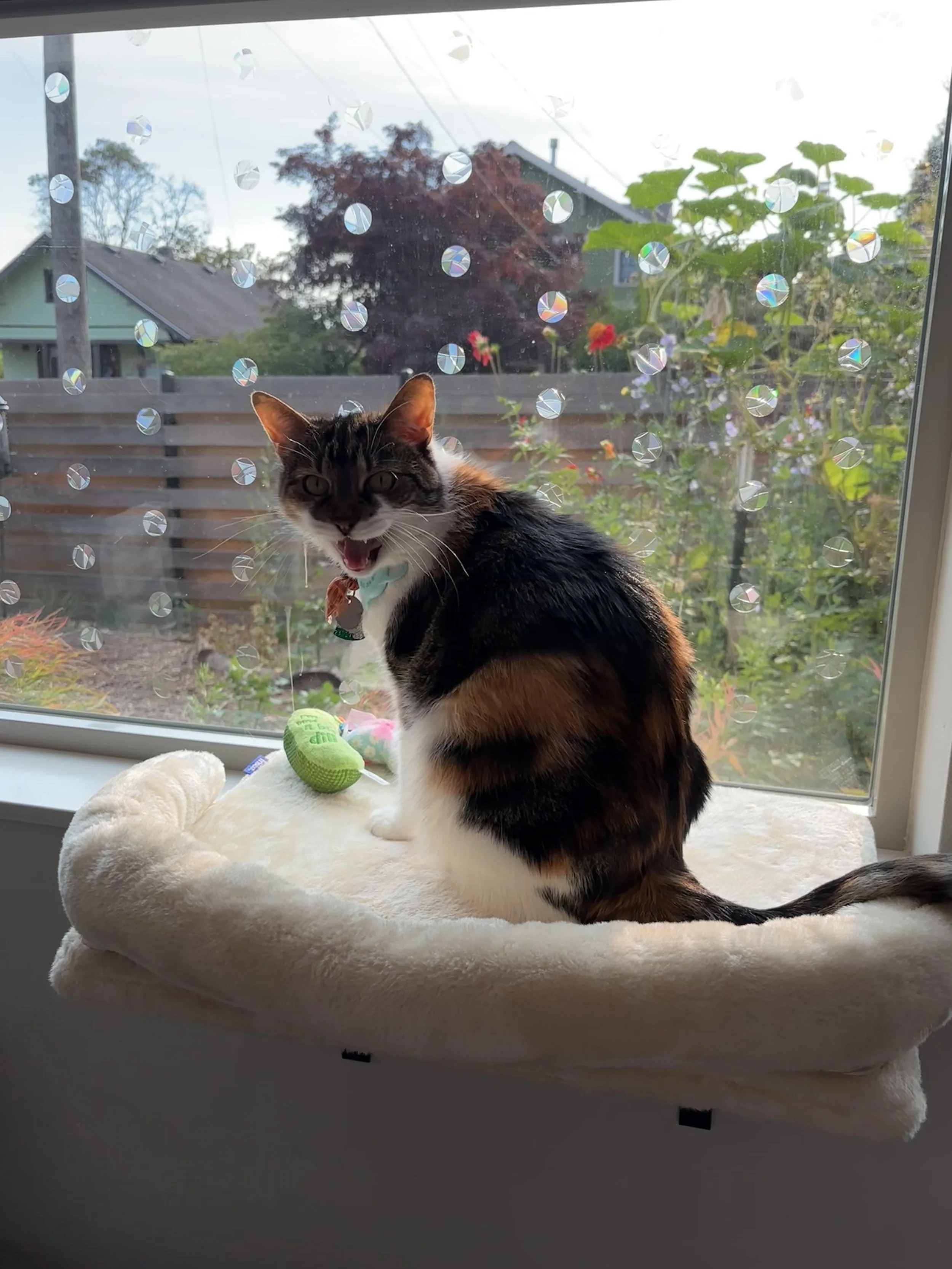
I love watching the butterflies spiral with each other above the blooms (I’m not able to ID them yet, but Butterflies and Moths of North America is a good resource if you’re interested). This meadow started as a way to draw in wildlife to entertain my indoor cat, Lily. But this “cat tv” has grown into so much more, a research wonderland sparking questions for me to explore.
BUTTERFLY-LESS IN SEATTLE
When I first moved to Seattle and started landscaping our garden, a passerby asked what I was doing. I shared that I was adding a pollinator wildflower bed. He responded that “there’s no point in gardening for butterflies because there aren’t any in Washington.”
He informed me that he had lived in Seattle for decades and had never seen a butterfly. I didn’t understand how this could be true. BAMONA’s database has verified records for 1036 species of butterflies and moths in the state of Washington!
But then I went to the hardware store. I was looking for a soaker hose and stumbled upon an entire aisle dedicated to caterpillar extermination. A wall full of concentrate liquids, granules, sprays, aerosols, dusts and foams promising to kill any caterpillars in your yard. My heart sank.
I had no idea how prevalent these pesticides were. No wonder he hadn’t seen butterflies! We’ve been killing all the caterpillars. We have to support creatures through their entire life cycle to get the chance to appreciate their beautiful mature form. If no caterpillars, then no butterflies.
THE WHISPERS OF SILENT SPRING
Prior to my training, I had no idea how dangerous all these insecticides could be. The labels feature words like safe, organic, natural. Did you know that federal and state regulations require you to obey the precise instructions on the pesticide label? I didn’t! And I don’t know if that’s common knowledge because I frequently see people using pesticides without the label-mandated PPE.
Pesticide exposure has been linked to cancer, with high rates of non-Hodgkin lymphoma. While a causal relationship has not yet been confirmed, the legacy of Rachel Carson’s Silent Spring should still sound in our minds and inspire us to minimize unnecessary exposure to pesticides. A “perfect” garden is not worth your health and potentially your life.
The essence of Silent Spring still rings true today. There are so many added difficulties in our gardens nowadays as we try to keep our insect friends safe. It’s hard to keep track of everything going on. People even buy plants specifically for pollinators, trying to help, without realizing that the plants may have been treated with neonicotinoids at the nursery.
These neuro-toxins are absorbed into plant material and kill insects that interact with the plant’s pollen, nectar, or plant tissue. In the search for nursery plant perfection, we’ve forgotten about plant purpose in our ecosystem. These plants do not exist in a vacuum, but in a relationship with the other species around them.
INTEGRATED PEST MANAGEMENT
You can have a beautiful, pesticide-free garden that is safe for you, your plants, and insects. Embracing insects can also lower your work in the garden! The USDA defines Integrated Pest Management (IPM) as:
“a sustainable approach to managing pests by combining biological, cultural, physical, and chemical tools in a way that minimizes economic, health, and environmental risks.”
By fostering beneficial insects, we can let them handle the work of managing the pest insects in your garden. If we provide the plants that these creatures need to thrive, the natural predators of pests will come to balance the system.
Your plants will survive in the interim as this natural balance gets established. Plants are much sturdier than we give them credit for. Up to a quarter of a plant can be eaten and it will be just fine!
COPING STRATEGIES
There are two ways to handle insect damage on plants: increased quantity or increased distance. If there’s a plant that’s featuring more than you’d like on the garden buffet, I would add more of that species to your space to diffuse the nibbling. If you invite people to a buffet and the same dish keeps running out, the response to this problem isn’t to remove the favorite dish from the menu. The answer is to add more of that food so there’s enough for everyone at the party to eat! This same concept applies to our gardens. If we’re noticing leaves being skeletonized, we should add more of those plants to the party.
Another option would be to embrace horticulturist and designer Tammany Baumgarten’s 10 Step Approach. Take 10 steps away from your plant and see if the damage still bothers you. If that approach doesn’t work for you, consider transplanting the tasty species to a section of the yard that’s further from your paths of travel. Added space from the plants will minimize the impact of insect munching on leaves.
I experienced this firsthand this year. My native honeysuckle vine had an aphid infestation that grew exponentially because a spell of cold weather stalled the appearance of the beneficial insects. While ladybug larvae eventually arrived and ate my aphid problem, I didn’t like having this frass-covered vine climbing a column right next to my front door.
I moved the honeysuckle to another location and I’m much happier with this arrangement. The hummingbirds and ladybugs still get to enjoy the plant, but I don’t have to stare down aphid damage every time I open the door.
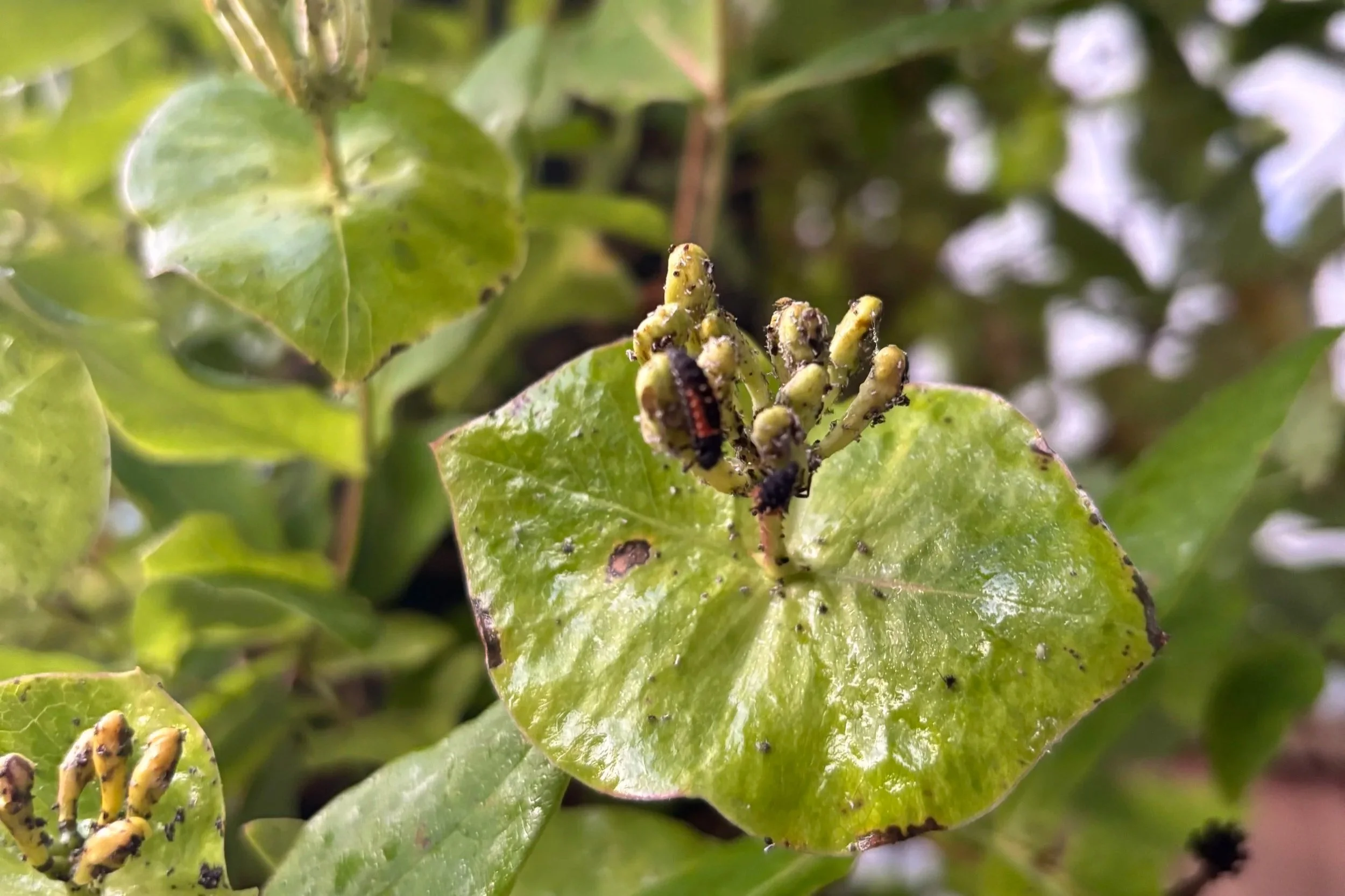
Ladybug Larva Eating Honeysuckle Aphids
PROTECTING THE PLANET
Animals add so much dimension to our gardens. We need the full range of creatures - insects especially - to keep our world alive. It's worth finding a safe design solution; removing pesticides from the equation leads to a healthier environment for you and nature.
Adding Integrated Pest Management to your garden is a win for everyone. A caterpillar may chomp on your plant, but a chickadee will scoop it up to feed to its chicks. Now that’s a truly safe, organic, natural insect killer! Happy gardening!