
Hellstrips Don’t Have to be Hell
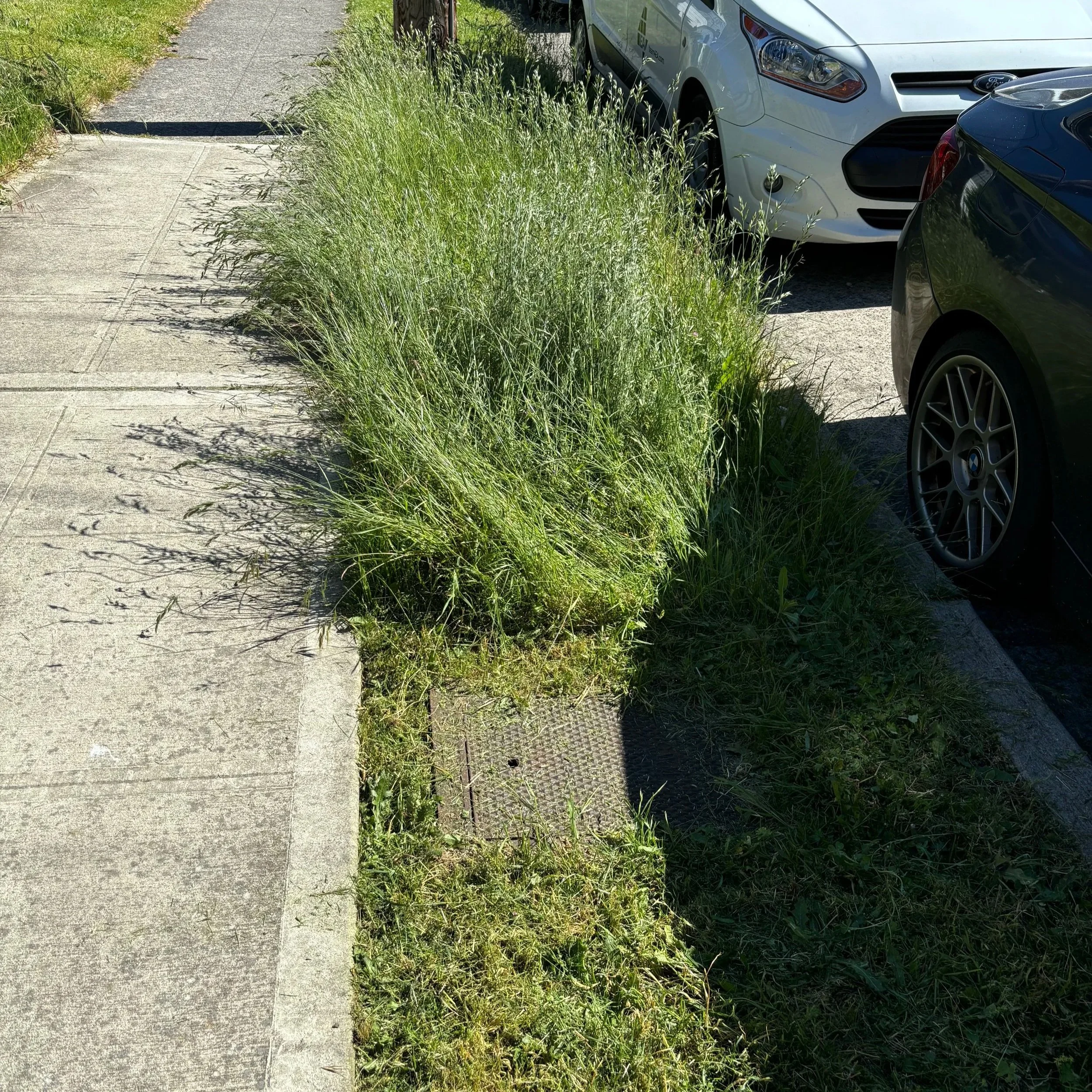
When we first moved into our house, I was greeted by a patch of “grass” between the road and the sidewalk. I was so excited to finally have a yard after living in apartments; I had no idea what awaited me in that hellstrip.
We didn’t own a lawnmower and didn’t have the budget nor space for one. I dragged a “for free” manual reel lawn mower dozens of blocks back to our house and learned the lesson that people tend to give things away for a reason.
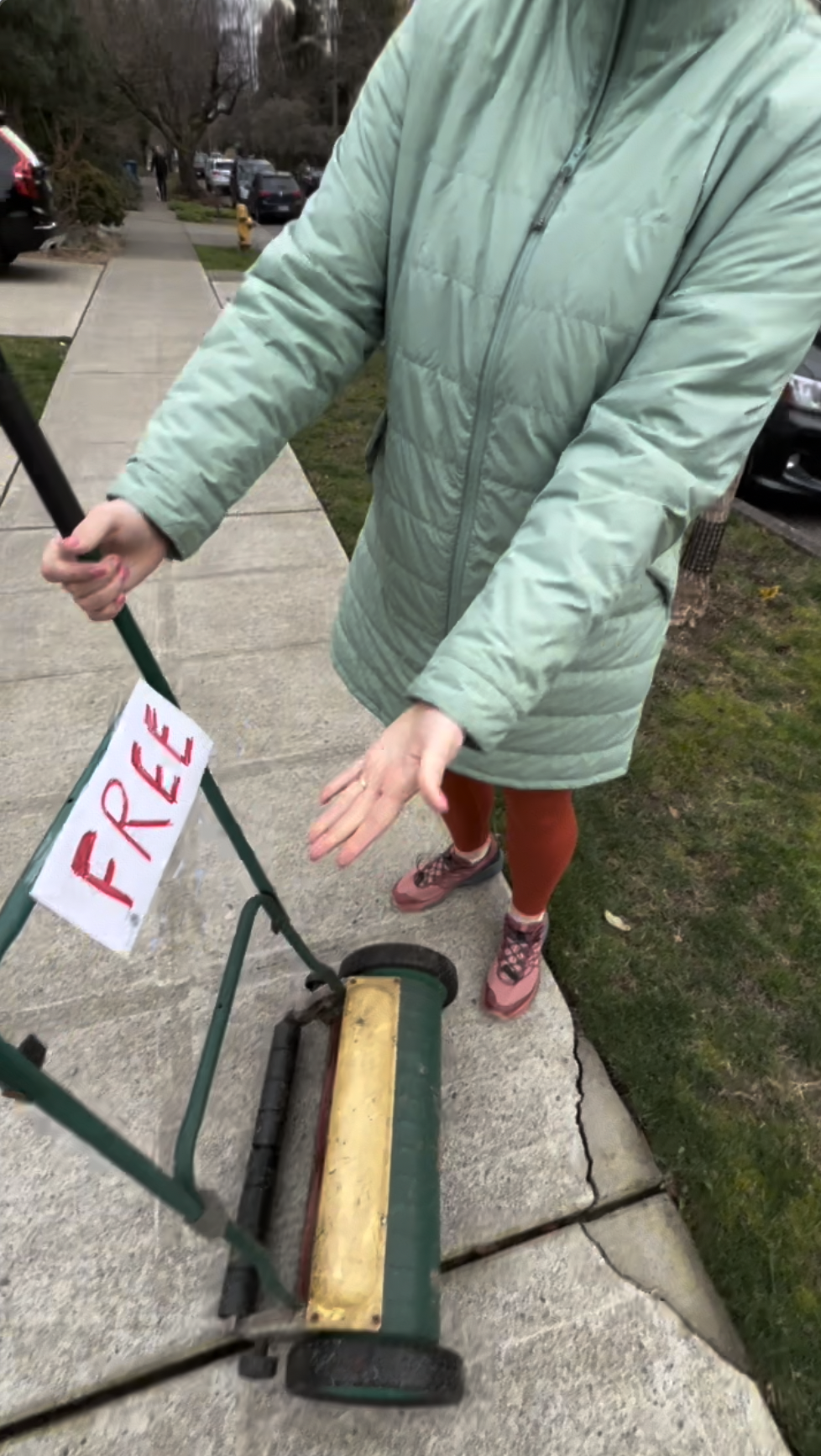
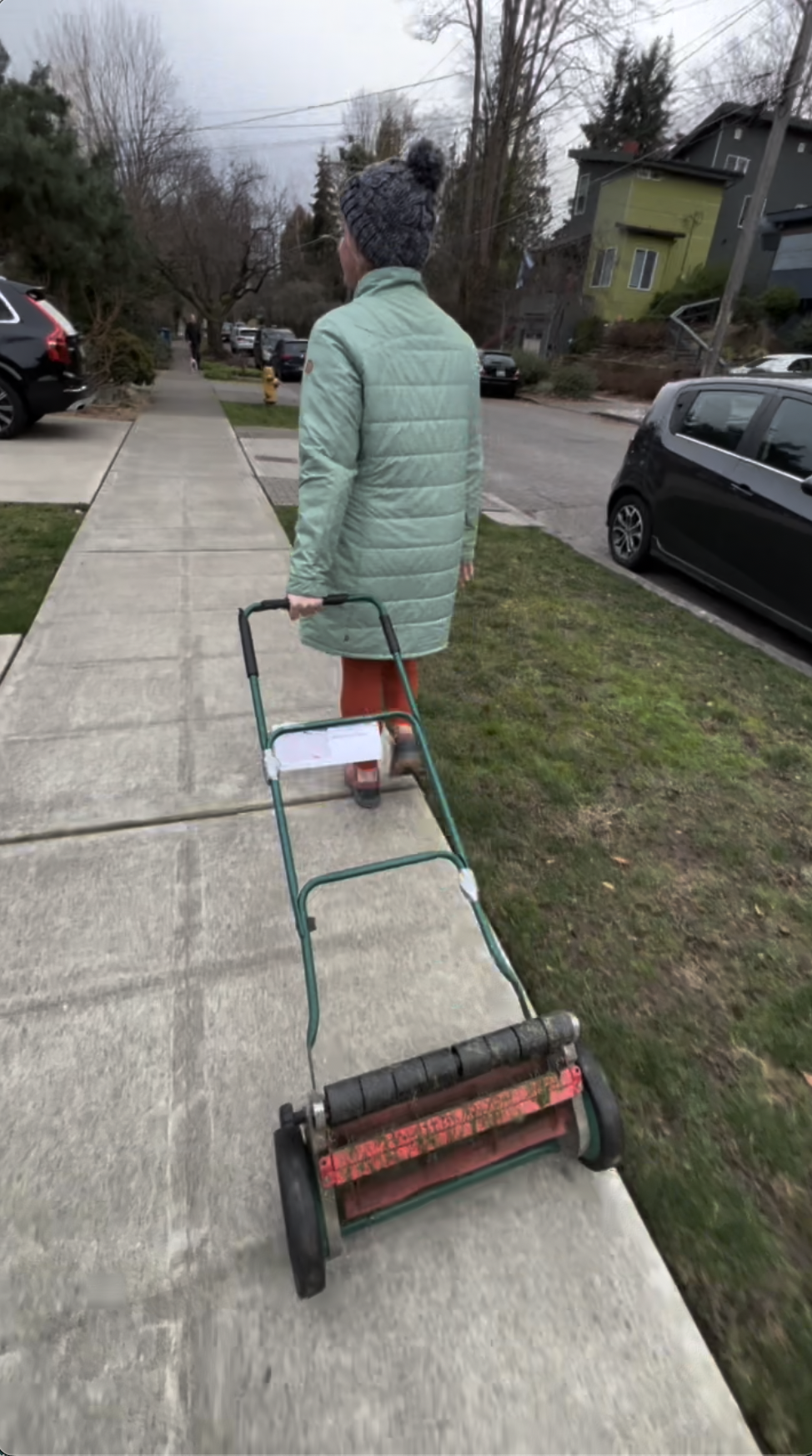
I tried battling the blades to sharpen them and was left with a tool that just seemed to smoosh everything against the ground instead of cutting anything. Eventually, I graduated to weed whacking the entire hellstrip and then using a combo of a push broom and a leaf rake to clean up the sidewalk. This was time consuming and frustrating and still ugly! I had walked around enough neighborhoods to know that hellstrips didn’t have to be like this.
THE DESIGN JOURNEY
I started planning a hellstrip makeover. I took photos of ones on my walks that I liked and searched Pinterest for more inspiration. I scoured Craigslist for flagstones and quickly realized my vision needed to reflect my actual budget.
I checked the plant inventory at Go Natives! Nursery for native plants that could tolerate rough, roadside conditions surrounded by hot concrete and foot traffic. I researched local bulk landscaping materials stores. I made a rough sketch of my layout and plantings. I was able to guesstimate the overall cost from there and decided to go for it!
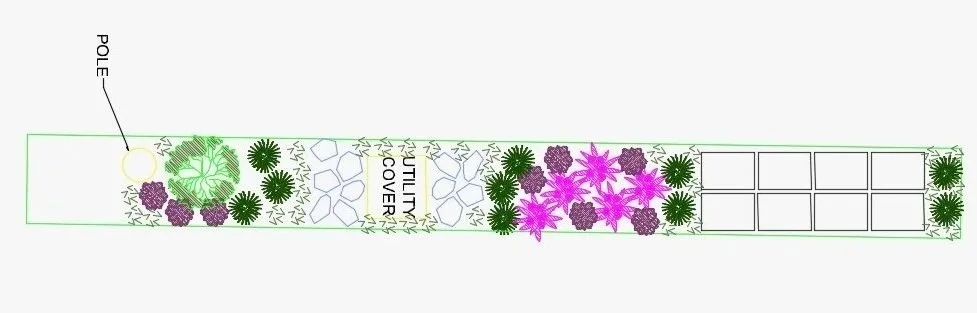
Original Concept
I checked city regulations and submitted a Call Before You Dig work order. Once I knew everything was legal and safe in my intended work location, I went to our local tool library and borrowed a lawn edger, a manual tamper, and a level. My plan was to remove the sod, install landscape edging to define beds and walking paths, amend the soil, install plants and mulch, and add a water permeable hardscape area by the road for trash pick up.
For some reason, I was convinced I could do this in a day. I was very, very wrong. Our mailman Nestor found me covered in dirt sitting on the ground at the end of the first day and said, “I bet this started as a small project, huh?”
SODDING SOD
Transforming your hellstrip is definitely not a small project. For those interested in undertaking this journey, I would highly recommend a week of cool dry weather, days worth of good podcasts, a solid wheelbarrow, and a hefty supply of back patches. A sturdy friend or two wouldn’t hurt either.
I didn’t want to kill the grass with sheet mulching because that process would raise the height of the bed above the sidewalk. Mulch spilling over the sidewalk looks messy. But more importantly, I wanted stormwater runoff to drain off the sidewalk into my hellstrip beds.
I started by cutting the sod into small squares so I could safely lift the sections. I learned quickly that the process will be much slower if you rush and hurt your back.
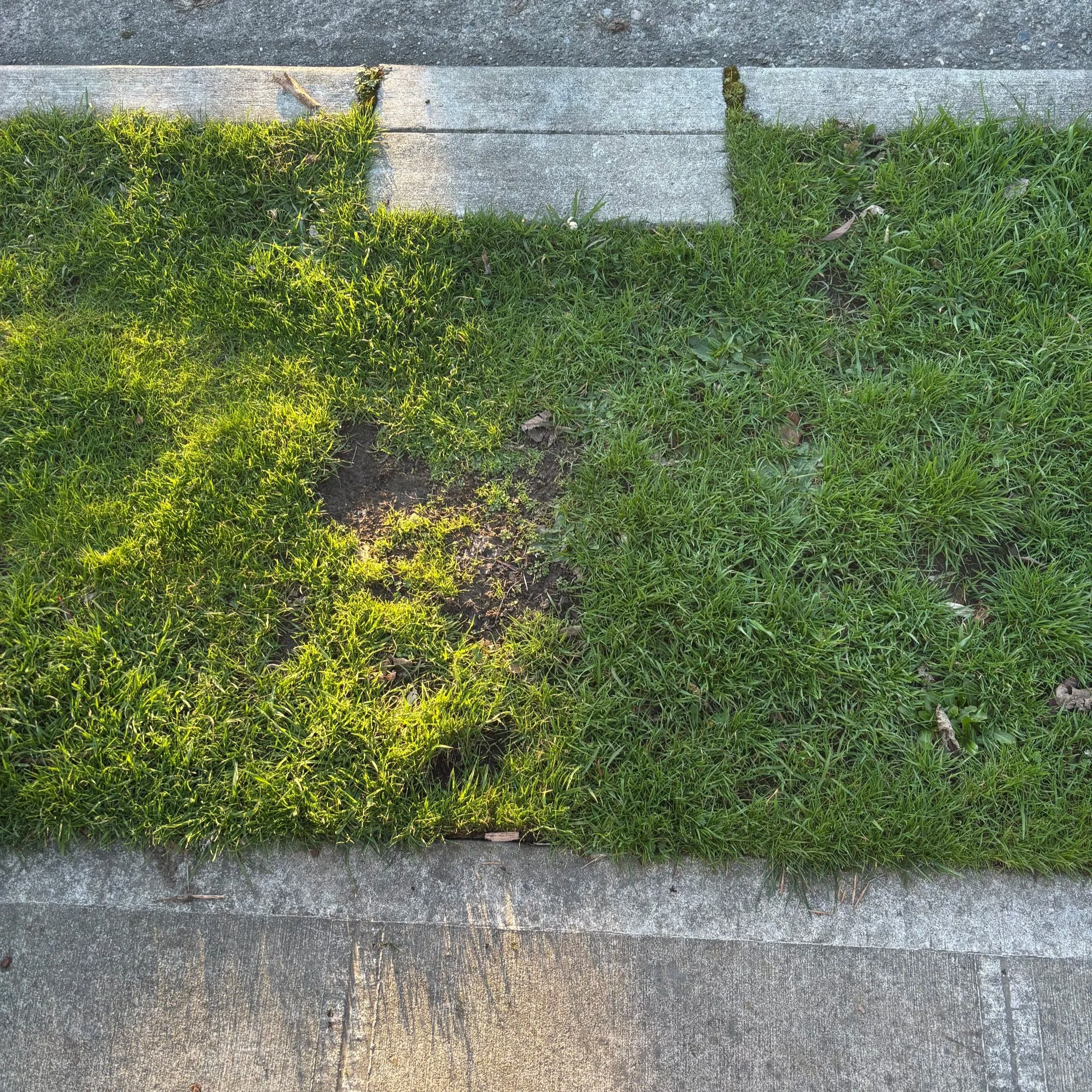
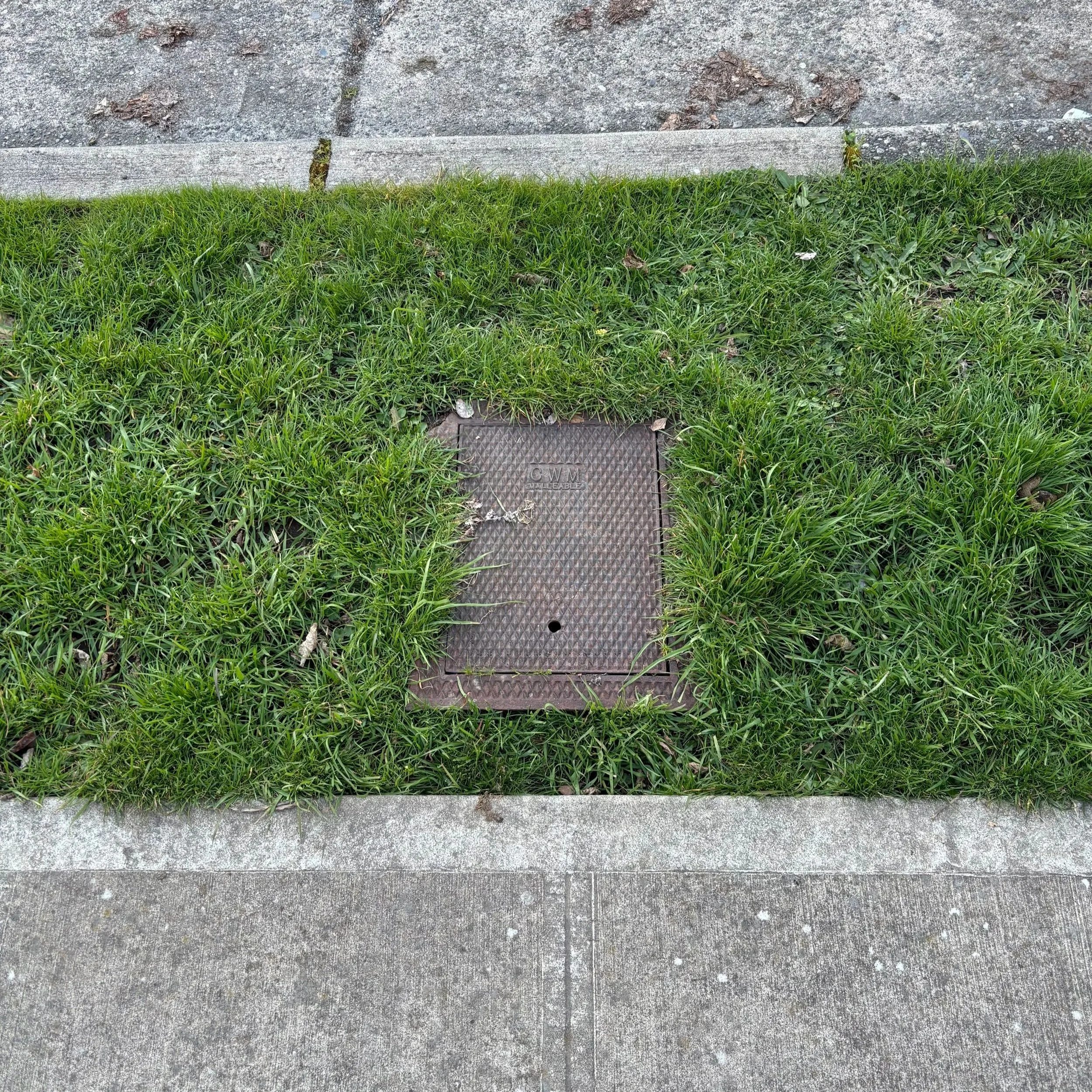
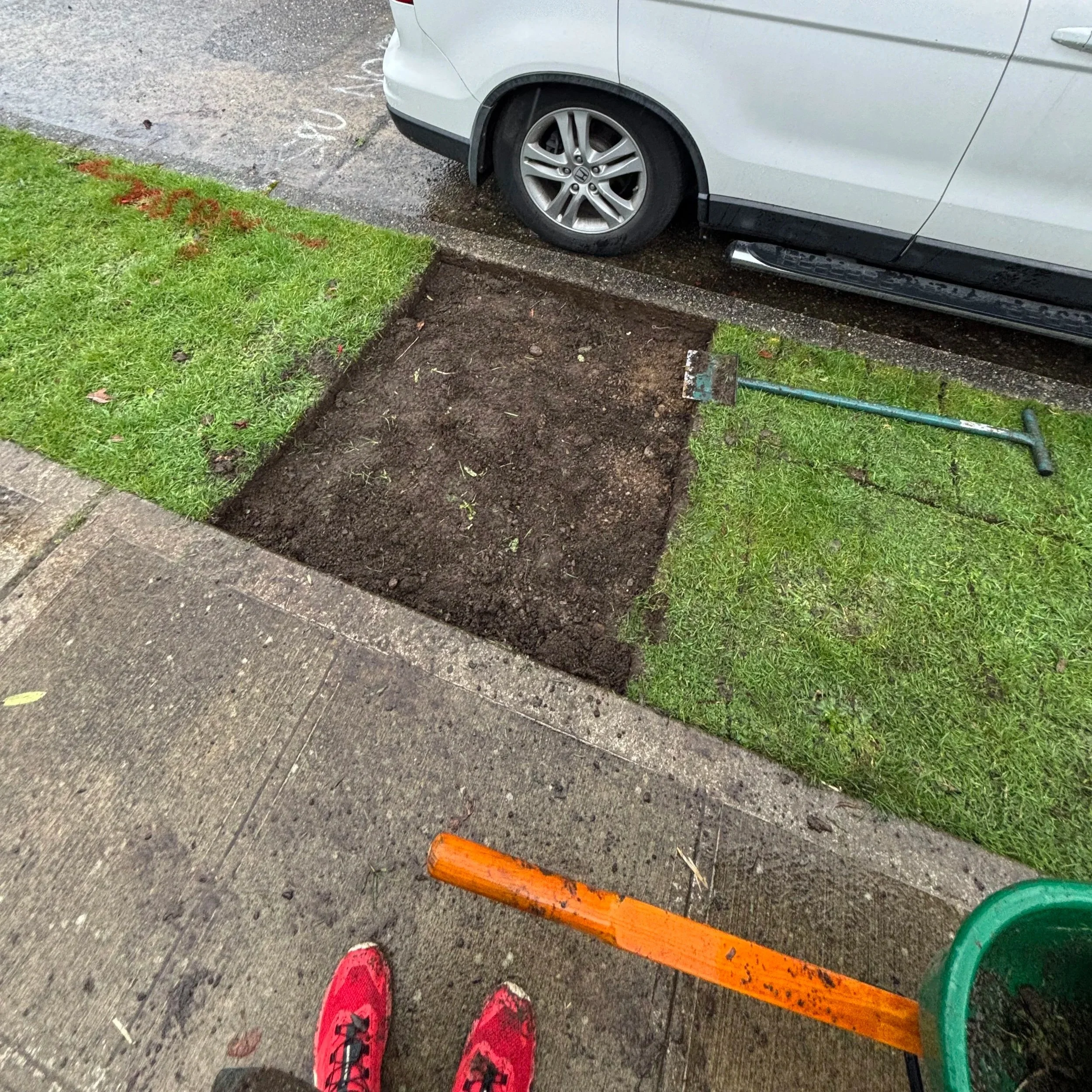
I thought the compost bin would be able to hold everything. The shallow grass root systems are deceptively heavy and filled the bin before even one bed was completed (there are weight restrictions for compost bins so be careful to keep things safe for the compost pick up crew). Luckily, the house had an empty rain bed along the side yard that was abandoned years ago by previous tenants.
I had actually been bemoaning to my husband earlier that week how I’d never be able to plant in there because it would be prohibitively expensive to fill with soil. Two problems of mine became the perfect solution: empty rain bed, meet hellstrip sod! I flipped the sod pieces with the grass facing down so they’d decompose and stacked them on top of each other to fill the rain bed.
PLANTING PIVOT
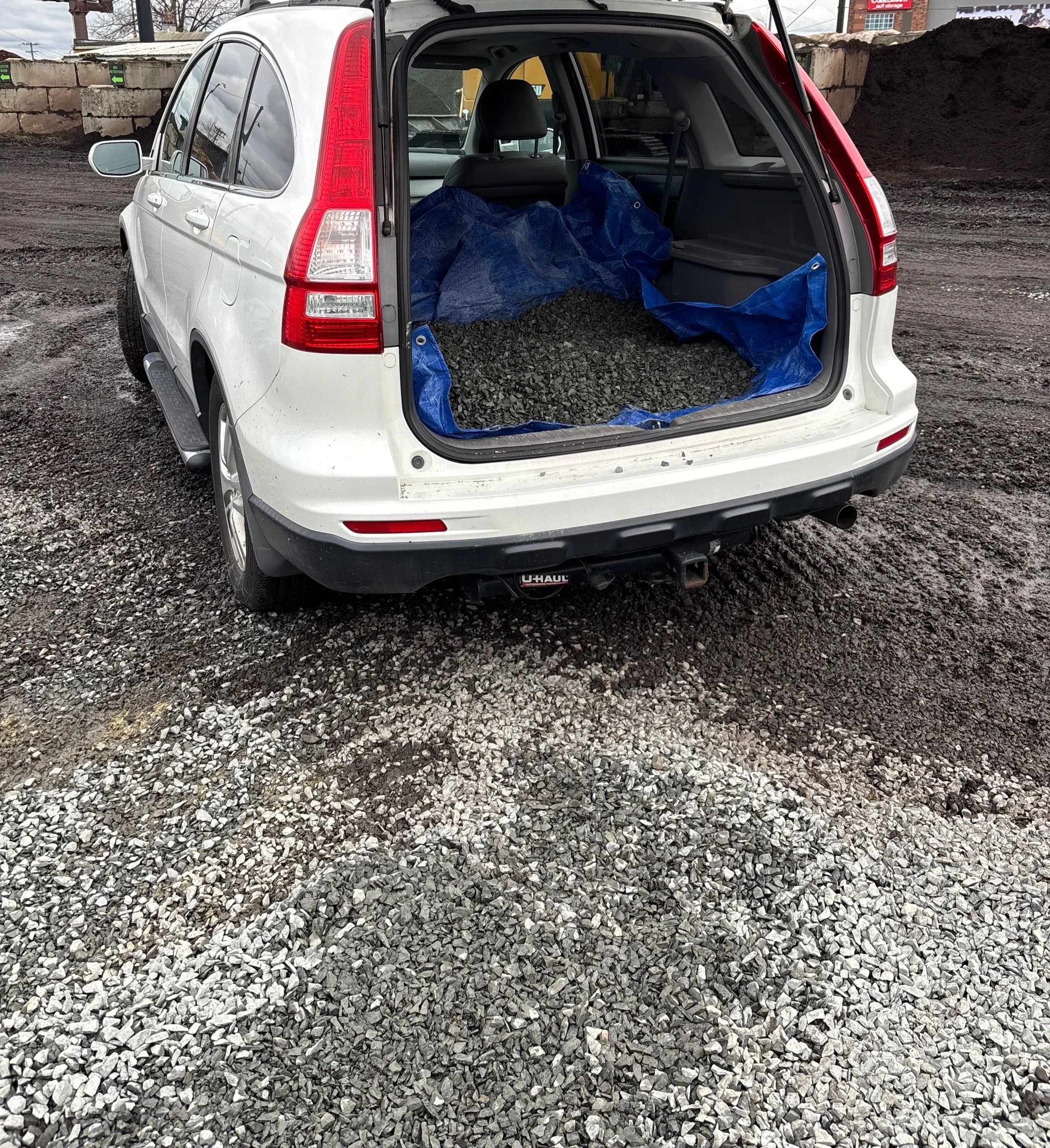
In the process of clearing the sod, I discovered a large section under the hellstrip was solid concrete. I realized that the old driveway had been covered with dirt when the house was renovated. Water could drain from that hardscape into the surrounding soil, but the planting depth was very short.
I had to say goodbye to my plans for a native blueberry shrub there and quickly pivoted to annual wildflowers. They are first succession plants (the first ones that show up to a disturbed site and begin the process of rewilding it back into that region’s peak nature). Since wildflowers can handle an eroding rocky hillside, I knew they could handle these unfortunate conditions. This was a good lesson that planning is vital, but you also need flexibility to adjust to the conditions you’re given.
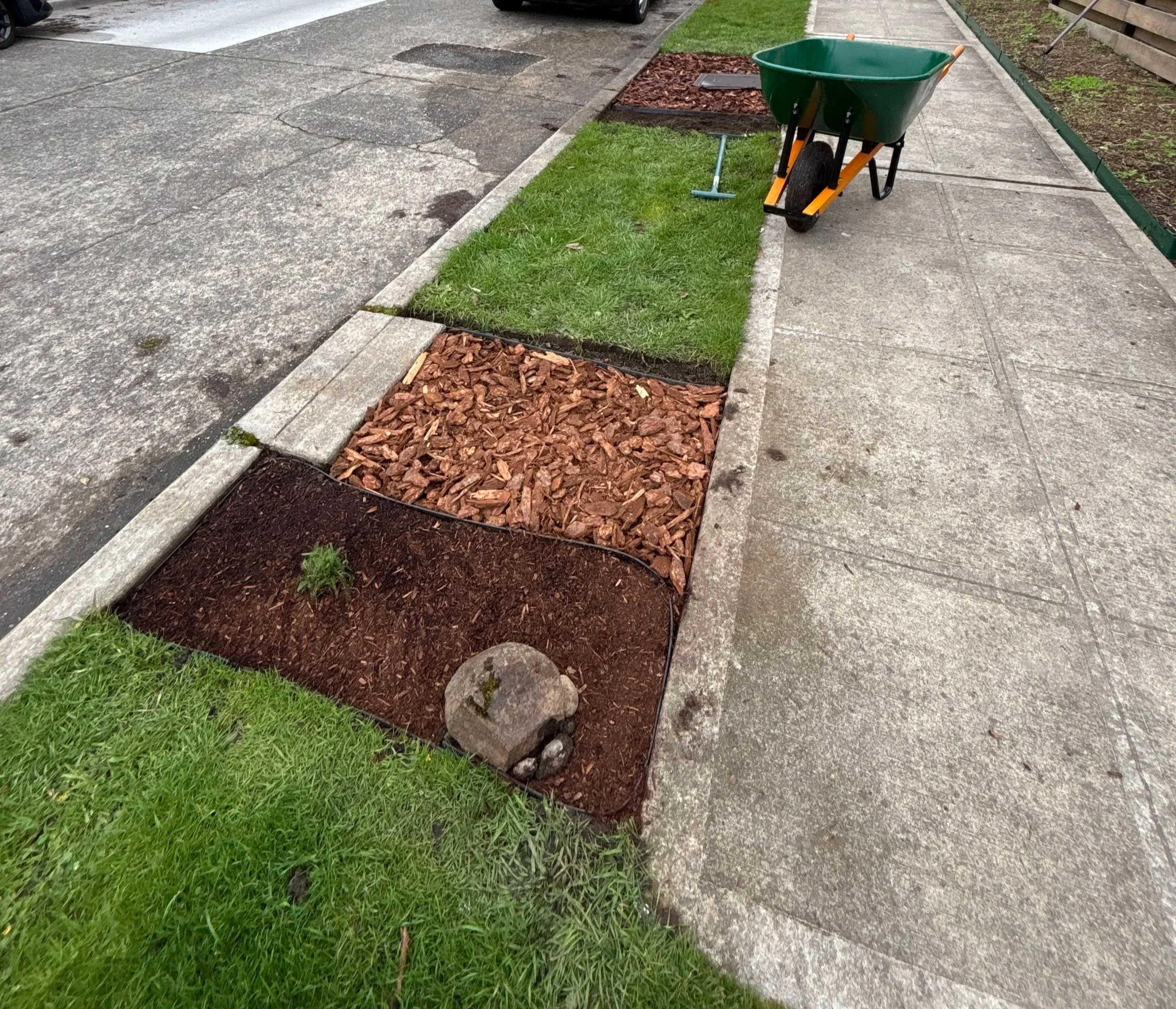
Clearing the sod proved to be the most challenging part of this renovation. Once that was done, the rest of the project followed quickly. At the southern end of the hellstrip, I installed a small bed with a native yarrow (Achillea millefolium) and a “sacrificial rock.”
I learned about this concept from a presentation by Erin Berkyto (@theknottygarden) at the 2025 Northwest Flower and Garden Show. She recommended including a designated peeing post or rock in garden designs to keep dogs from peeing on and killing plants. These rocks are too small, but I figured something was better than nothing. I hope to source tall basalt columns in the future to serve double duty as the pee rock and as a water puddler for pollinators.
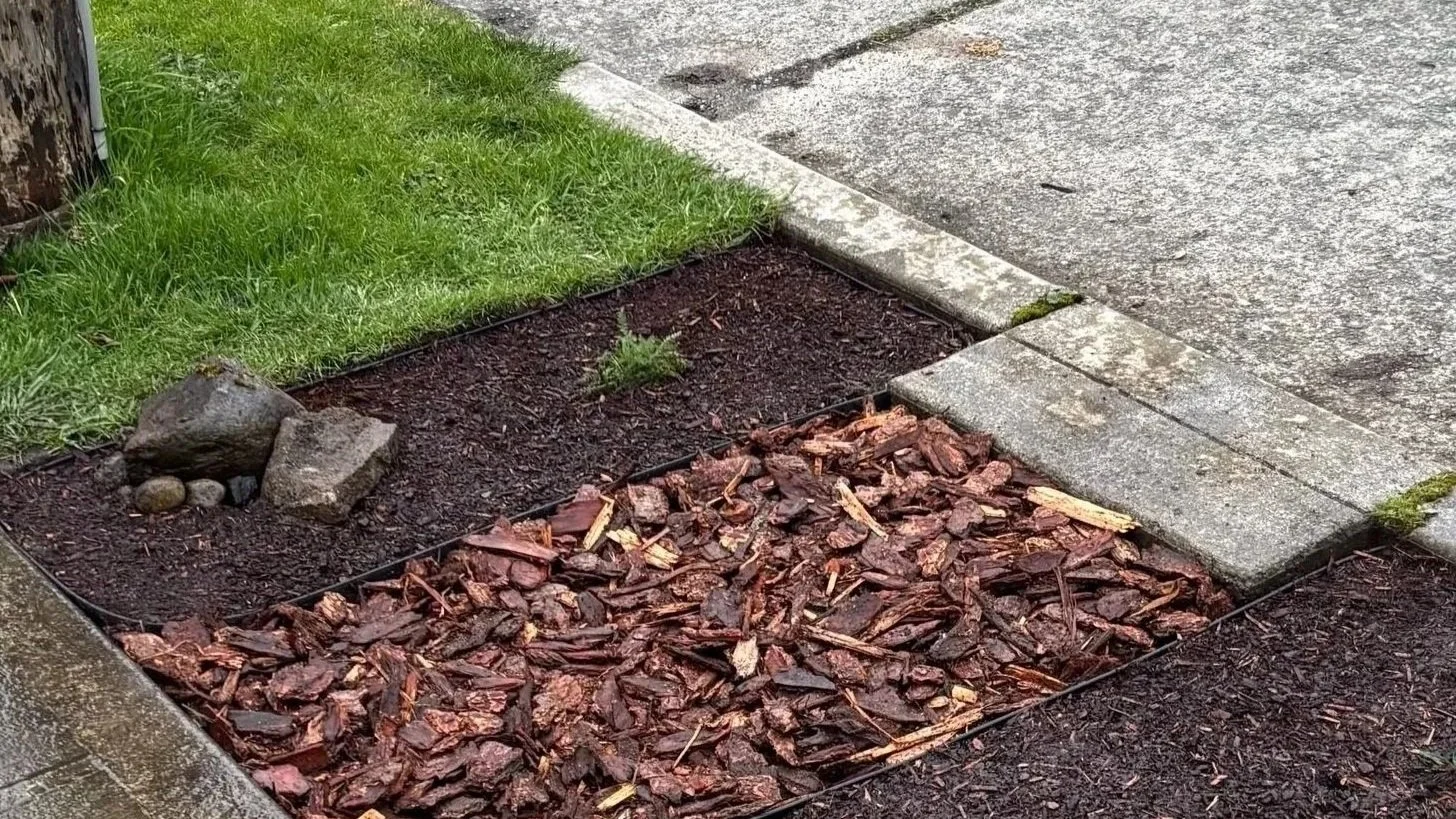
Southern End of the Hellstrip with Beauty Bark Walkway and Sacrificial Rock
The middle bed contains a blueberry bush and a native strawberry groundcover as living mulch. I’m not harvesting blueberries because of car pollution concerns, but it’s a great host plant for multiple species. I’m looking forward to the winter interest it will bring as the branches turn red in the fall.
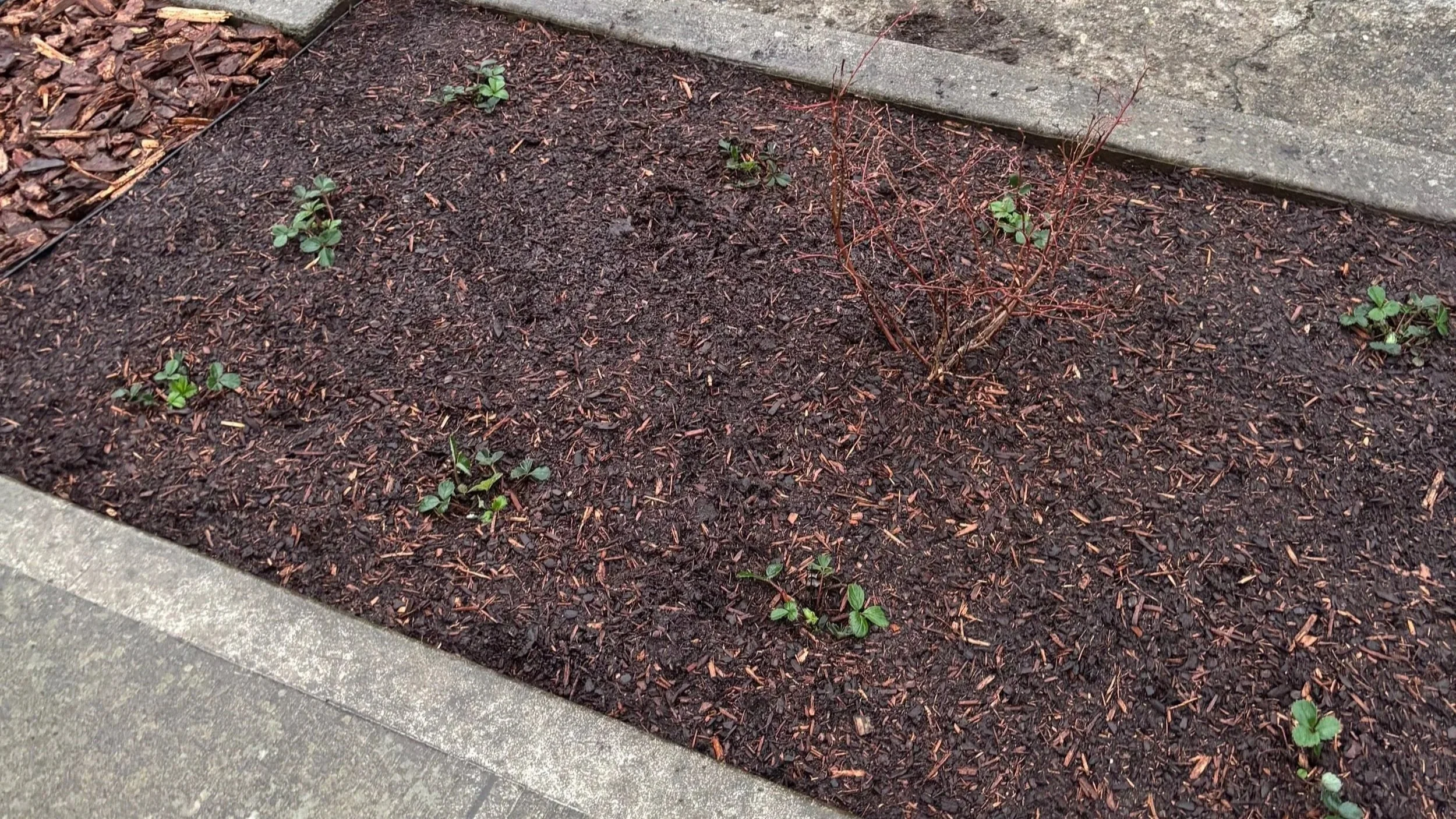
Planting Bed with Blueberry Bush and Strawberry Groundcover
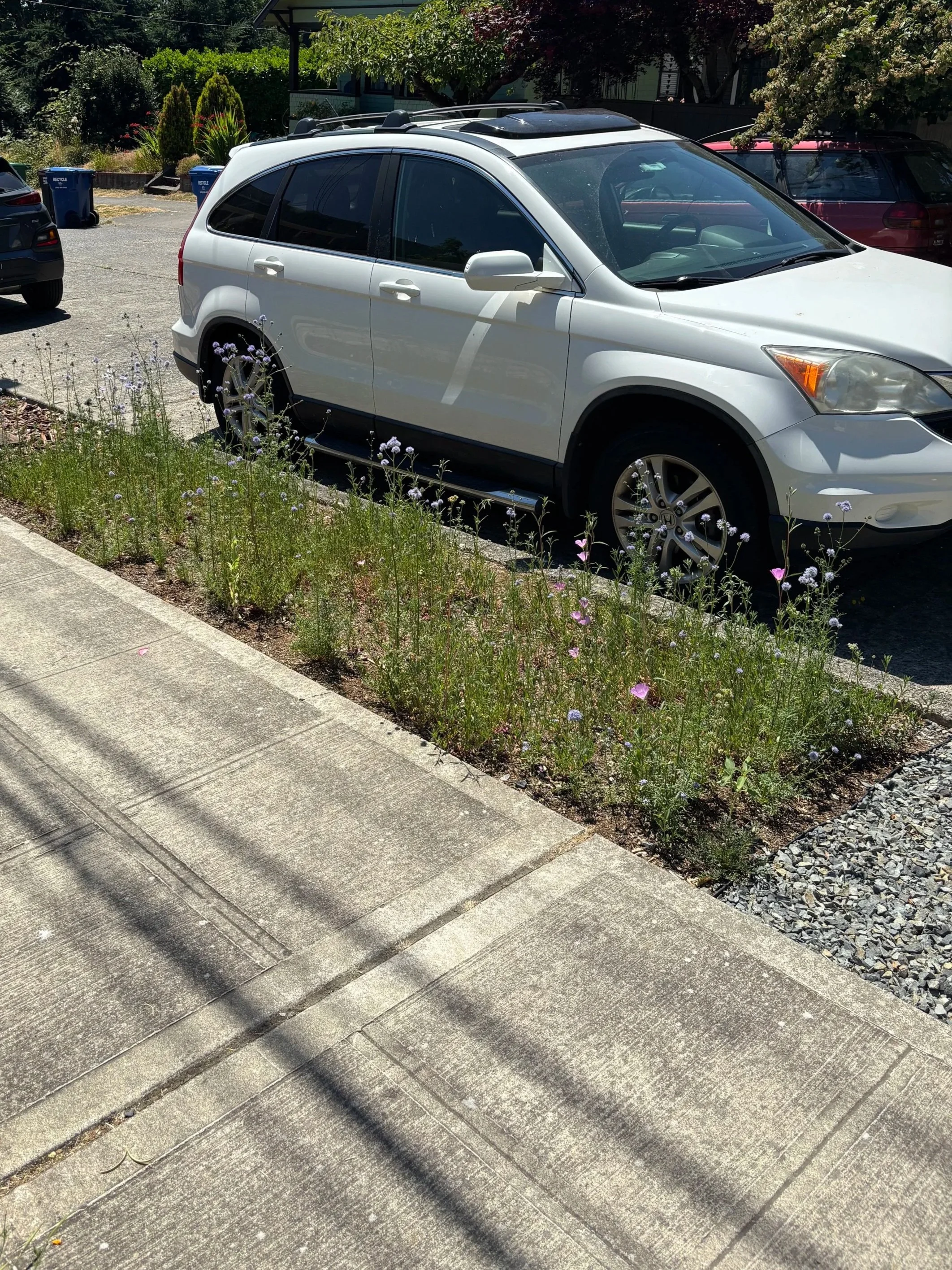
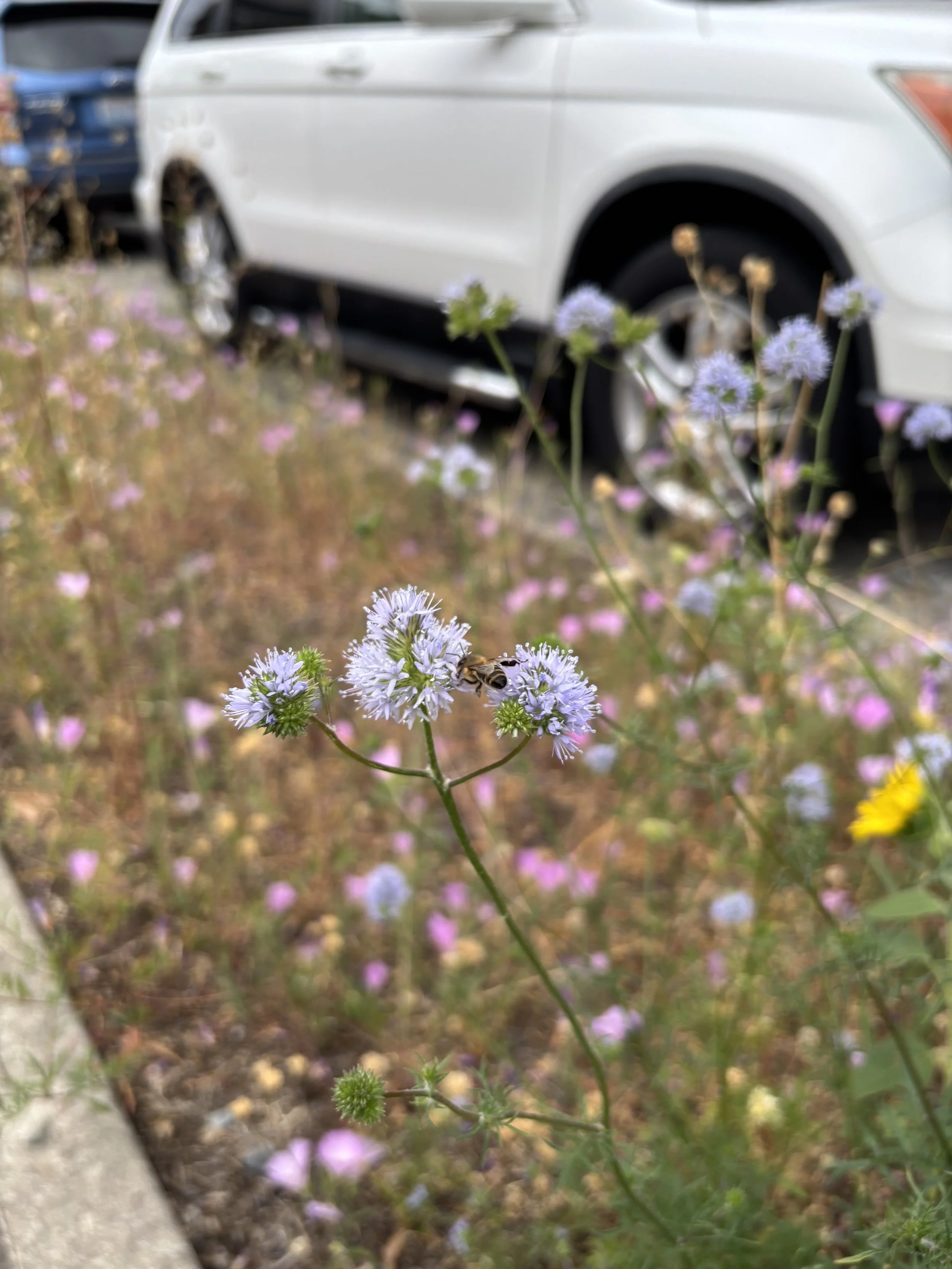
The northern bed has my favorite PNW native wildflower Farewell to Spring (Clarkia amoena) and Globe Gilia (Gilia capitata) from Northwest Meadowscapes. I’ll eventually replace it with some perennials that can tolerate the short rooting depth with the buried driveway, but I’m enjoying the annuals and the constant pollinator buzzing in the mean time.
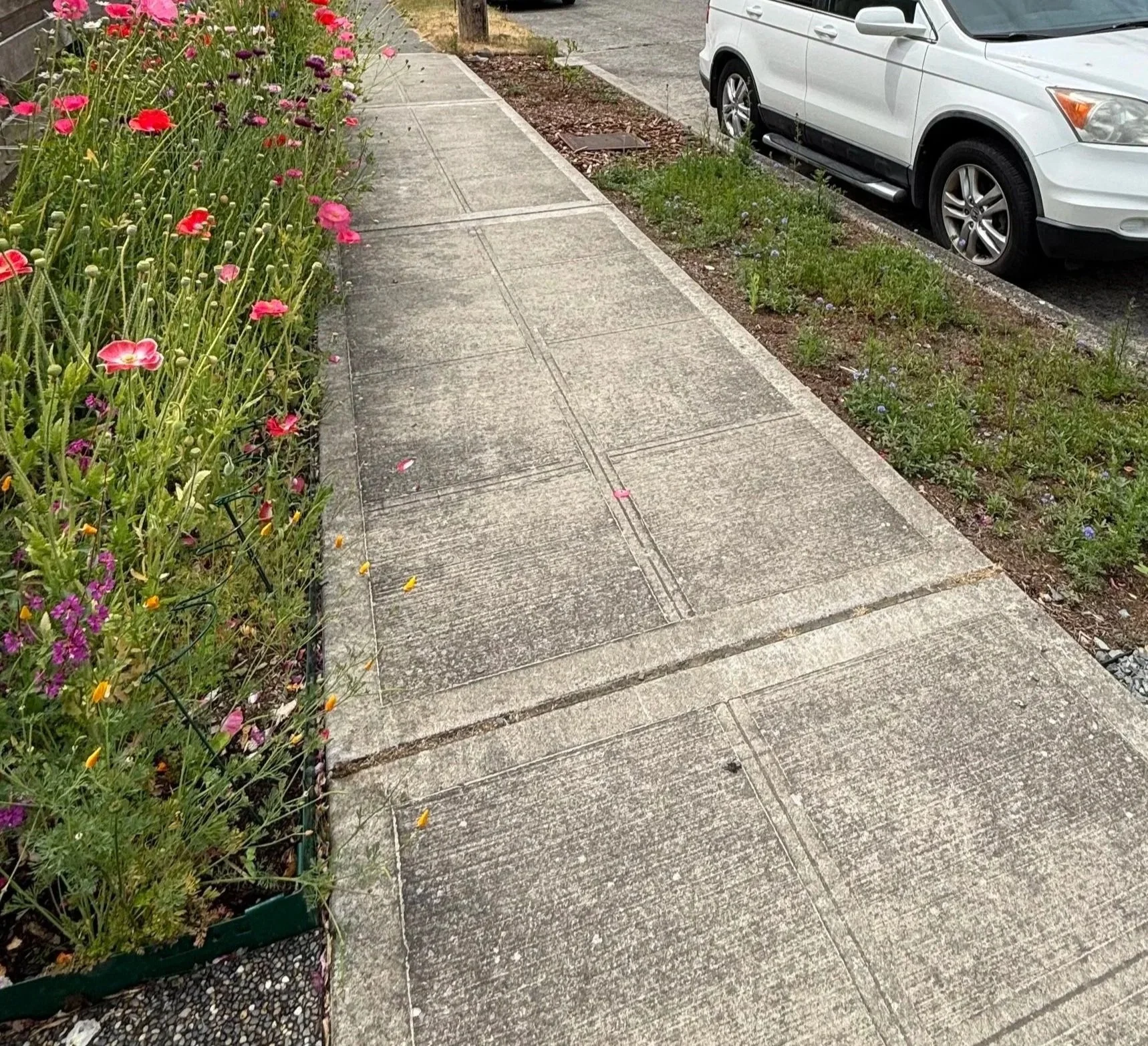
LAWN LESSONS
It was a lot of labor initially to landscape the hellstrip, but long-term maintenance has been so much less now that I’ve removed the grass. Instead of being home to rogue dog poop and noxious weeds, my manicured hellstrip now greets me with blooms and buzzing bees. If you’re on the fence about converting your hellstrip to garden beds, I say hell yeah! Happy gardening!