
Botanical “Bad Words”
As a recovering English major, I am still haunted by the power of word choice. I see the repercussions of language everywhere. And you may be thinking right now, “how in the world does this relate to plants?” But I promise this will make sense soon, so hang with me!
Connotation easily sways our opinion. Let’s say I introduce you to two gardeners. One I introduce to you as a free-spirited, adventurous plant-lover and the other I warn you is an unpredictable, fickle horticulturalist. Because of the associations with these words, I can guess who you’d rather meet. However, this is describing the same person! It’s just the framing that shifts our perspective from positive to negative.
I want to interrogate the language we use in the plant world. This may initially seem silly in the grand scheme of things, but it impacts how we think about plants, which then influences how we interact with our ecosystems. In this way, our words can damage or heal the environment.
WEED
Let’s start with the basics: weeds. The etymology of the word ‘weed’ shows a divergence in meaning through time. During the pre-16th century, weed meant any vegetation you did not intentionally plant as a crop. So any naturally occurring plant was a weed.
Throughout the centuries, this morphed into a description of an unwanted or undesirable plant. While weed was once a neutral description, it is now loaded with a very different meaning. Unfortunately, a lot of native plants have ‘weed’ in their name because they were naturally occurring.
Would you be excited about my design plan for your garden if the plant list included Joe Pye Weed, Sneezeweed, Milkweed, Fireweed, and Pokeweed? Now what if the plant list had Queen of the Meadow, Helen’s Flower, Indian Paintbrush, Rose Bay Willow Herb, and Garnet?
You probably saw this coming–they’re the same exact plants. Are we avoiding ecologically impactful and beautiful plants just because of negative associations with ‘weed’? I try to use Latin nomenclature to circumvent this, but it’s a good reminder that words influence us, even when we don’t realize it.
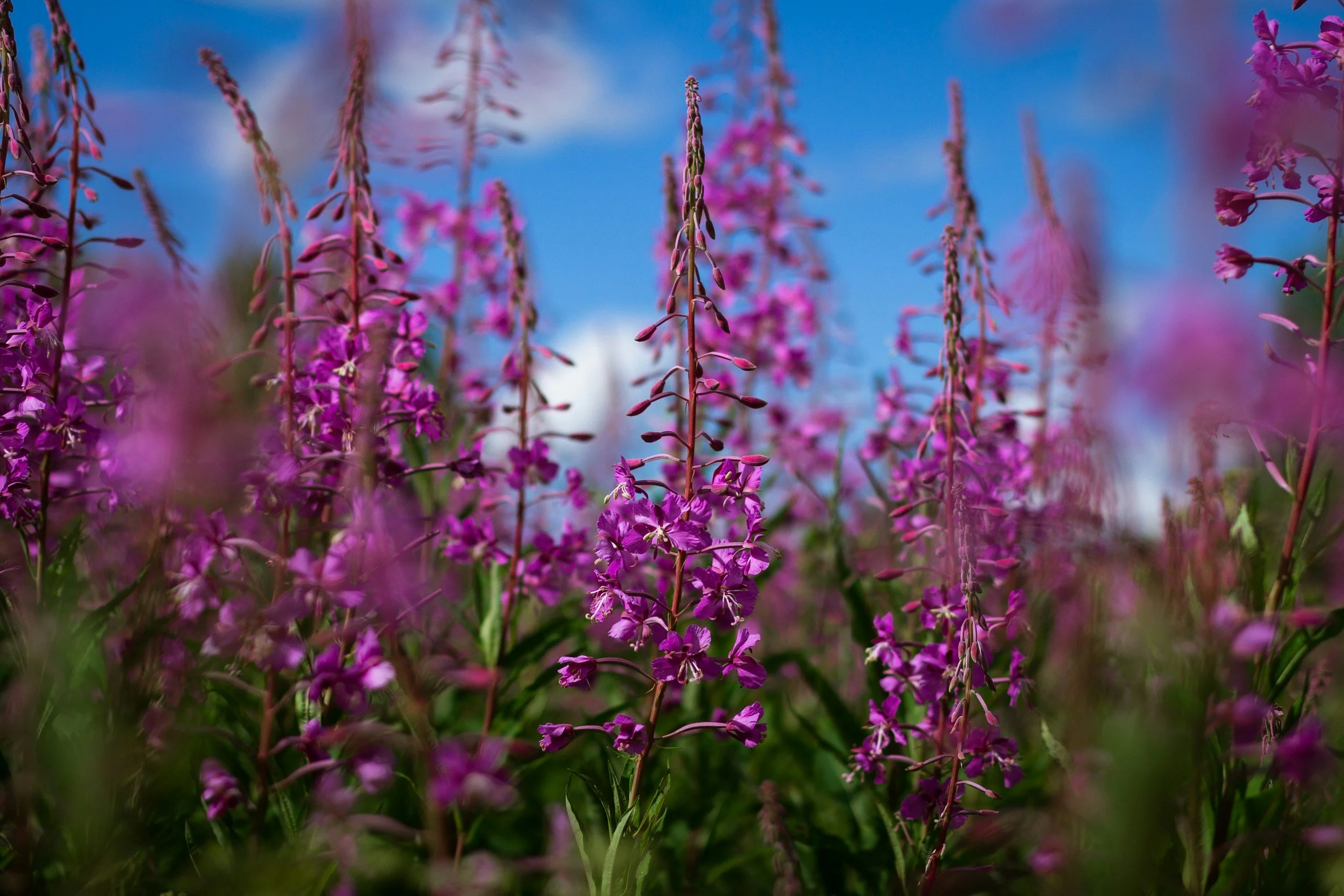
Fireweed
ORIGIN CATEGORIES
A common practice, especially in the ecological gardening world, is to delineate plants based on their origin. You may be familiar with descriptors such as native or ornamental. The best plant origins explanation I’ve ever heard came from Ethan Souza, a biologist and Natural Resources Manager at the Mauna Lani on the Big Island of Hawai’i. Ethan kindly agreed to share his analogy:
"One way that I will often ask people, especially students, to think about different classifications of species is to think of them as guests at your party, and to think of the party as your ecosystem.
Endemic species (species that are found in one place and nowhere else) are your best closest friends, it's natural to see them at your party (their native ecosystem) but it would be a surprise to see them elsewhere.
Indigenous species (species that naturally occur in multiple areas) are your friends who are also friends with other people. It is natural to see them at your party, but it would also be natural to see them at other parties.
Introduced species (species that have been brought into a given ecosystem by humans but do not have a significant negative effect on that ecosystem) are people who you did not invite to your party, but they have shown up and they are being courteous and having a good time.
Last are invasive species (species brought into a given ecosystem by humans that do have a significant negative effect on that ecosystem), this is someone who shows up at your party uninvited and immediately starts making a mess and disrupting the party."
To summarize, endemic species (sub-category of native) are only found in one place, indigenous species (also known as native species) naturally occur in multiple regions, introduced species (aka non-natives, ornamentals, agriculture) are non-harmful decorative plants or crops that people brought into an ecosystem, and invasive species are harmful plants that people introduced to an area.
Or to go with Ethan’s great analogy, endemic plants are your BFF, indigenous plants are people in your larger friend circle, introduced plants weren’t invited to your party but they brought chips and dip so they’re cool to stay, and invasive species crashed your party and flipped over the buffet table.
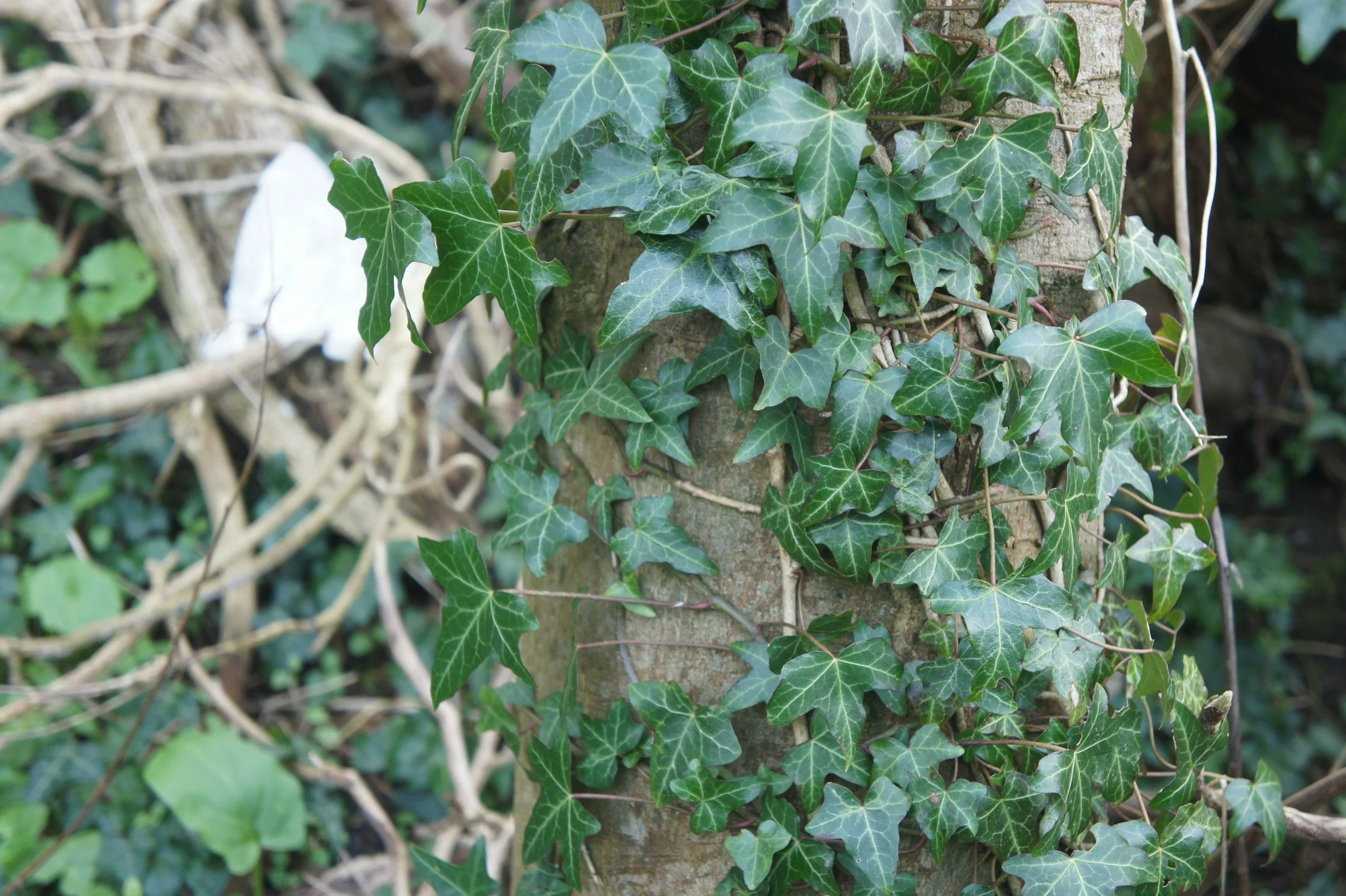
Party Crasher English Ivy
INVASIVE PLANTS HURT THE PLANET
We just learned with Ethan’s analogy that invasive plants are non-native species that damage the ecosystem. They cause harm in a variety of ways. Invasive plants lower biodiversity, damage agriculture and food yields, disrupt the food web, increase wildfire risk, decrease food resources and larval host sites for insects, poison birds, alter the soil chemistry, impact carbon sequestration, and deplete water resources, just to name a few examples. If you want to learn more, check out the Noxious Plant List for your region.
The damage from invasive plants can be subtle and deadly. Over millennia, wildlife has developed relationships with specific plants that cannot quickly be replaced. We call these specialist species. A well-known example would be Monarch butterflies and Milkweeds. Monarch butterflies cannot survive without Milkweeds.
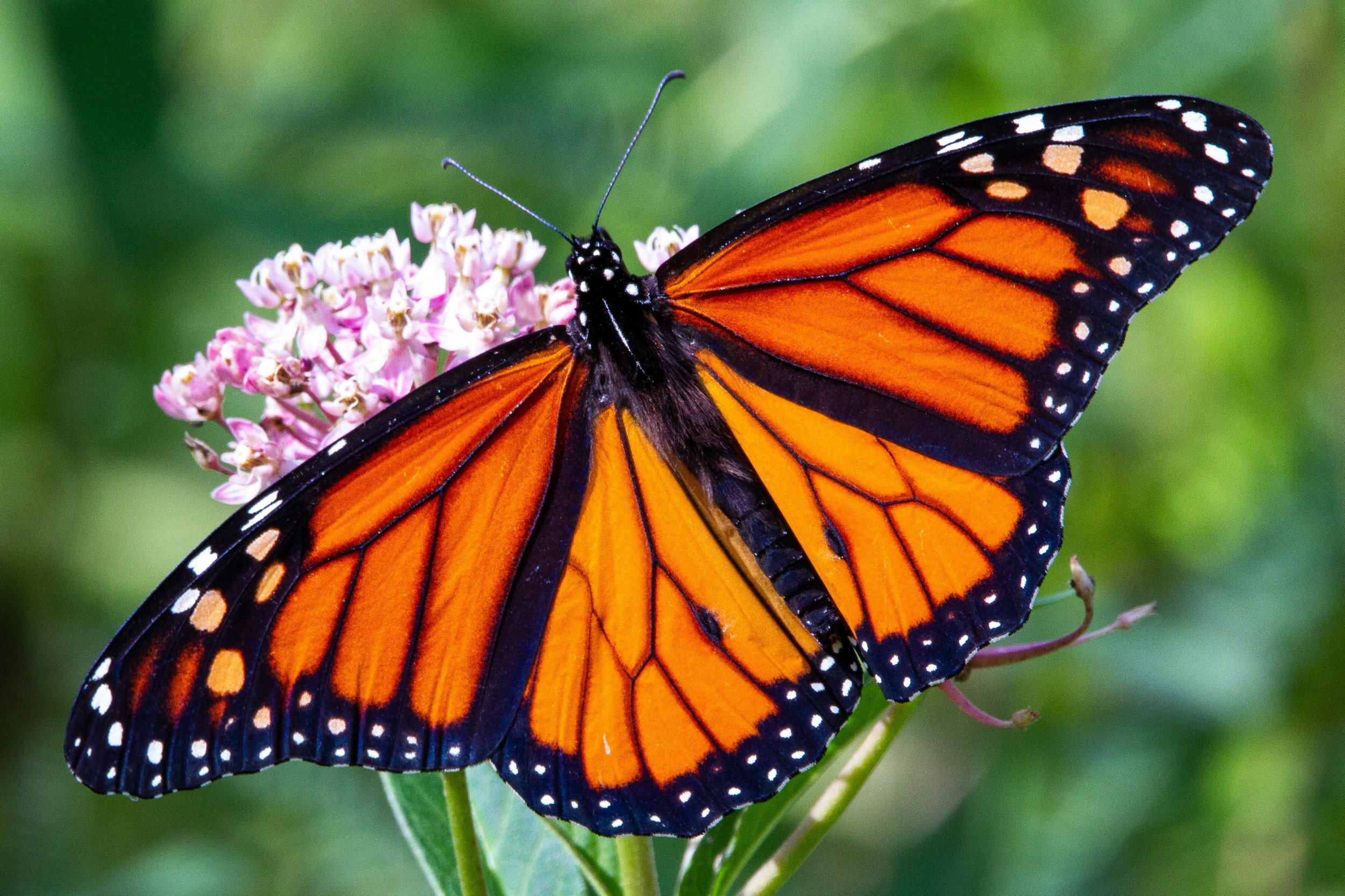
Monarch Butterfly on Milkweed
According to the Xerces Society, approximately 90% of plant-feeding insects are specialists. This means that a large portion of insects rely on specialized relationships with the native plant species they've evolved alongside. If an invasive plant outcompetes and eliminates those native plants in the habitat, these specialized insects no longer have food to eat. And without food, they will die.
A majority of these specialist insects also require certain native plants to complete their reproductive cycle. We refer to these plants as larval hosts. Many insects have unique adaptations (like toxin resistance) that allow their offspring to eat the larval host plant. If invasive plants remove the native ones from the ecosystem, the larvae no longer get the nutrition they need to survive. (If you want to learn more about host plants, I have an entire post dedicated to them here.)
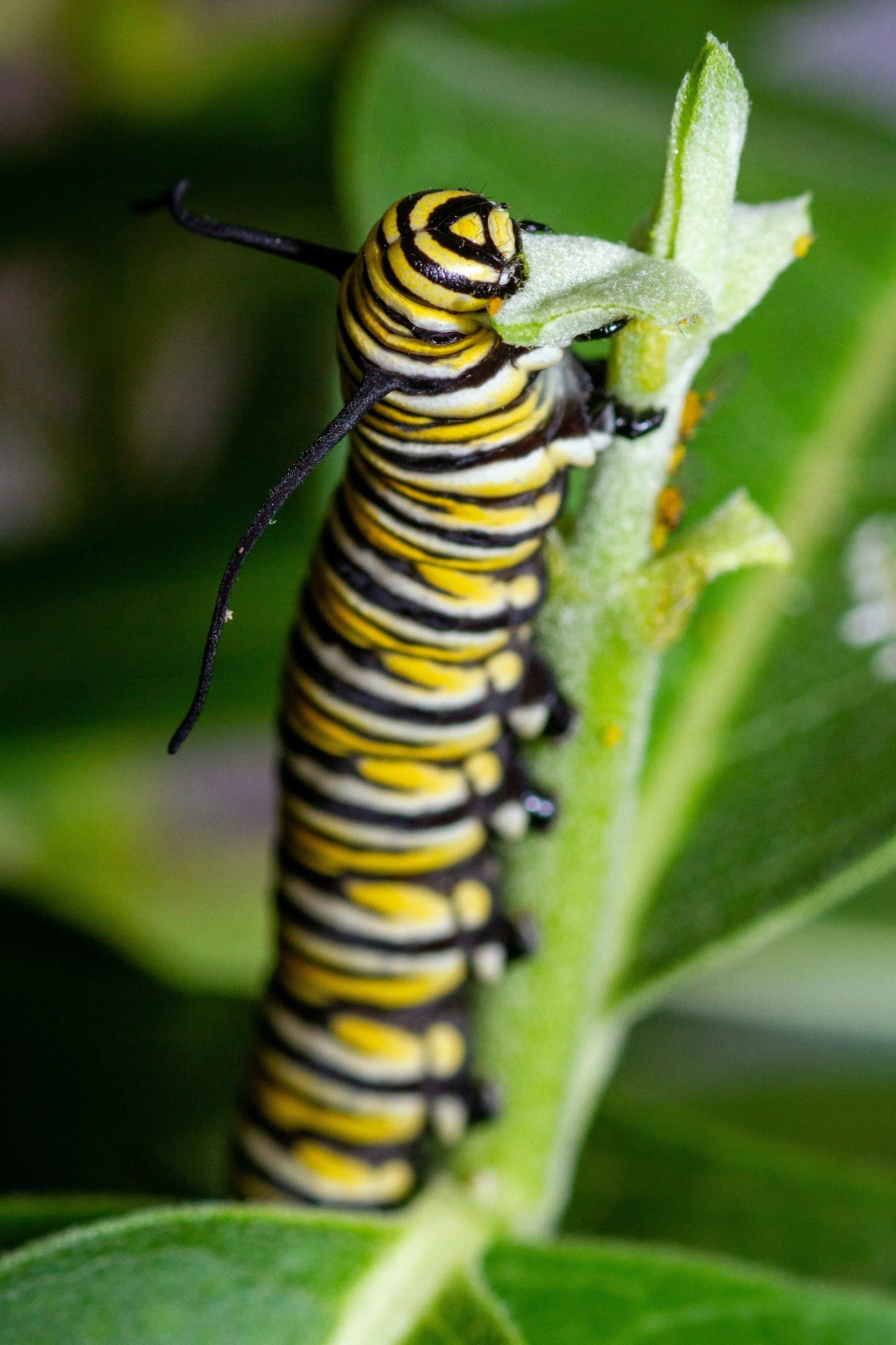
Monarch Caterpillar Eating Milkweed
So, why should you care about this? Insects underpin our entire food chain. Insects pollinate our food, act as the energy transfer between plants and larger animals, and decompose waste. If we lose insects, then we lose the plants they pollinate (majority of plants, including our food crops) and the predators that eat insects, such as birds, amphibians, reptiles, and small mammals. And if we lose those creatures, we lose the megafauna that rely on them for food. The domino effect of losing insects would decimate the world as we know it.
While scientists argue about whether or not humanity would be able to survive in a world with collapsing ecosystems, I don't want to experience that. I want the next generations to enjoy a world with biodiversity and food security. Studies have found that we are at risk of losing 40% of insect species. I am passionate about garden design and science education on invasive plants because we need to take action to protect the planet. We have to defend native plants from invasive species to safeguard insects and thus our own species' survival.
The damage from invasive plants is not usually witnessed in your yard. Invasive plants are notorious for spreading easily over large distances. This happens through wind or animal seed dispersal. Invasive plants don’t have their natural predators to keep them in check and they can overrun the environment.
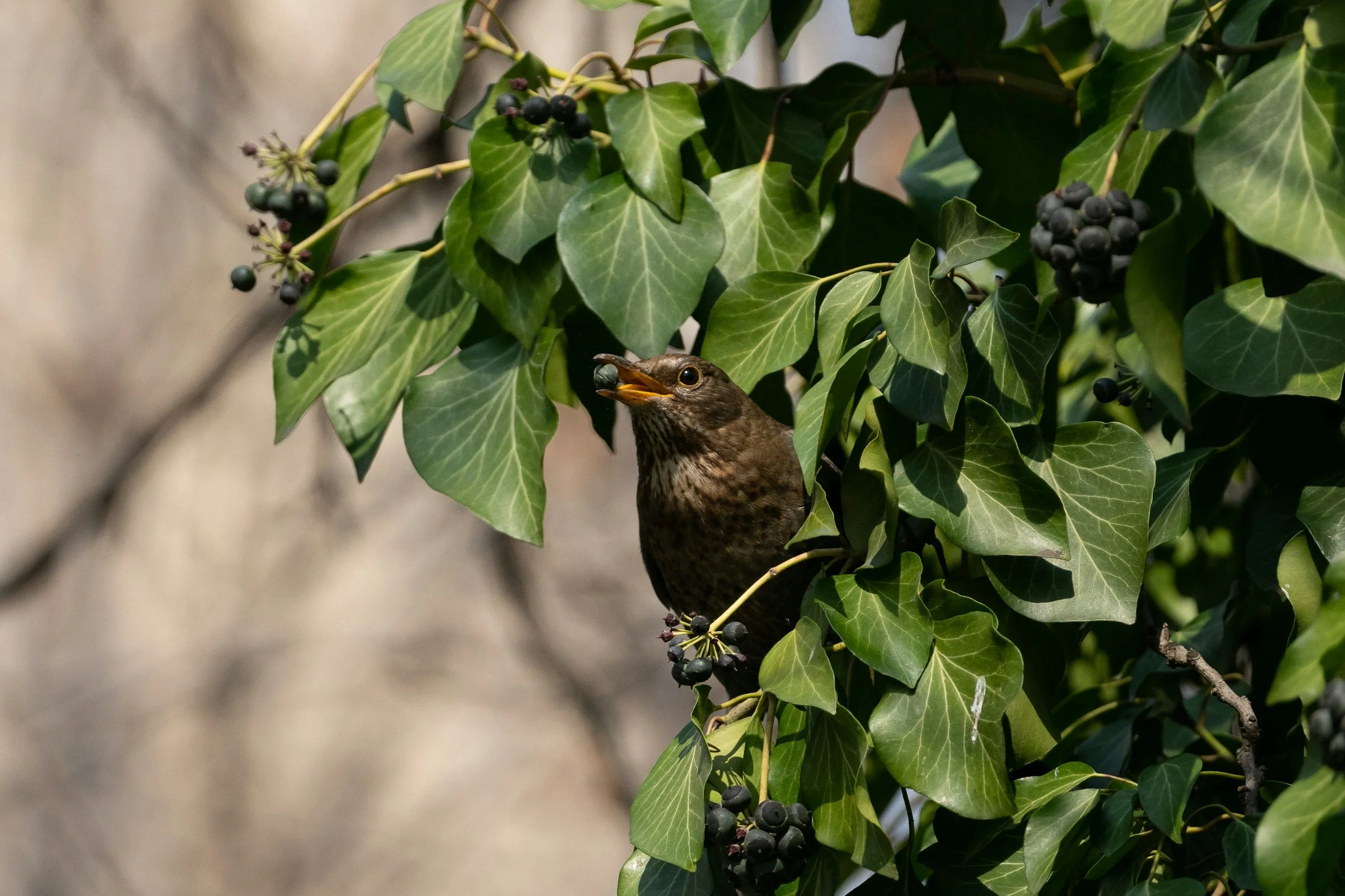
For example, English Ivy may appear tidy in your garden bed, but it invades parks and forests and kills native trees when birds spread the berries. Cherry Laurel is another popular invasive plant in the PNW. It performs well in gardens as a privacy hedge, but it has escaped cultivation into wilderness areas where it is wreaking havoc. Put basically, invasive plants can appear prim, proper, and well-behaved in your garden while terrorizing wild and farming areas.
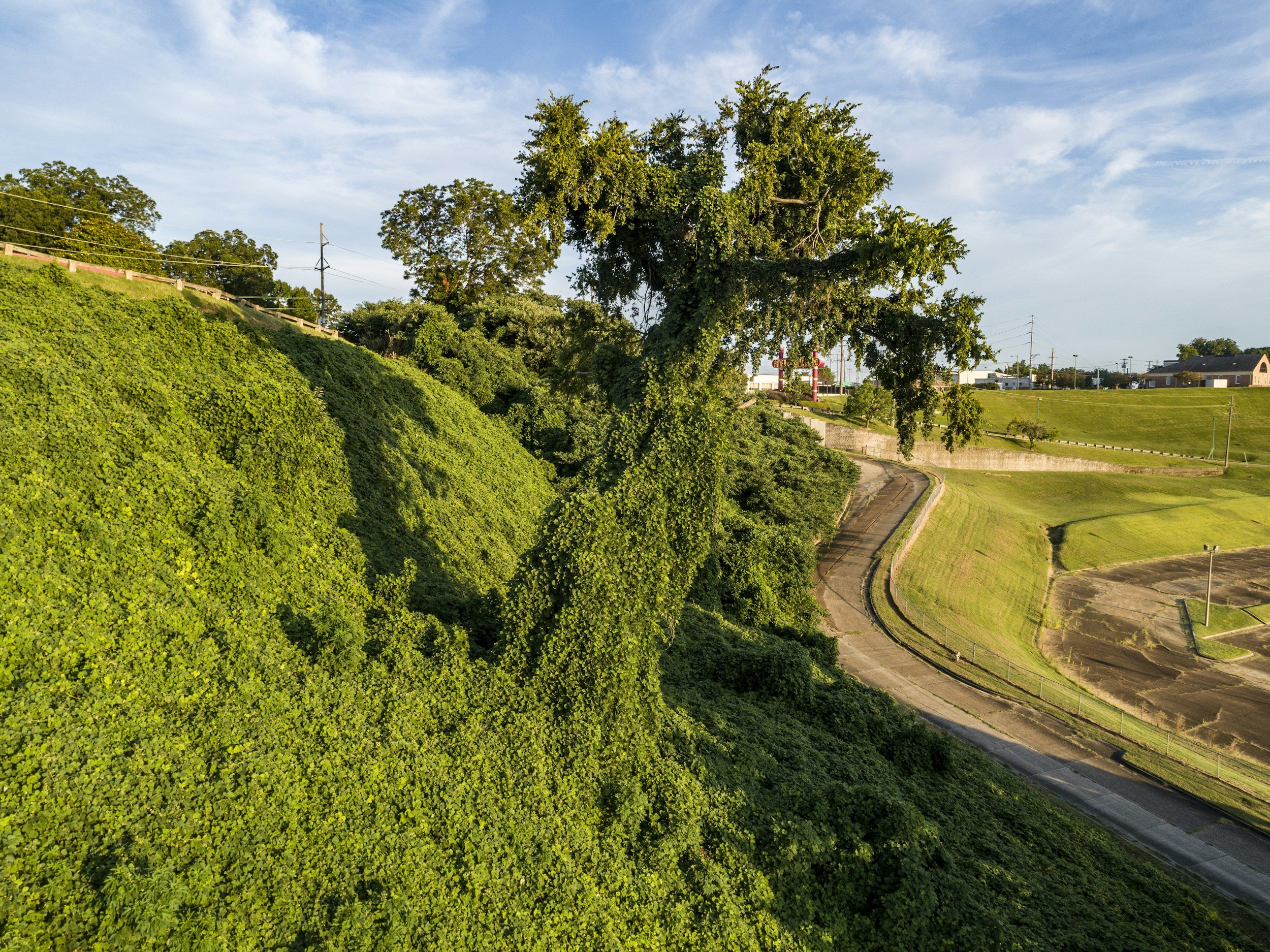
While the harmful effects may be immediately obvious (such as Kudzu covering entire trees), we may never notice the damage spreading from invasive plants in our gardens. Invasive is an origin category, not a local growth behavior.
If you have questions or doubts about invasive plants, check out entomologist Dr. Doug Tallamy's book "How Can I Help?" This book is a compilation of responses to common questions he receives. I have it linked in my Resources section or you can rent it from your local library.
AGGRESSIVE
Going back to my spiel on word connotation, aggressive is just a negative label for robust. People slap that label on plants that grow quickly and expand if planted in their preferred environment. Plants can be aggressive reseeders or rhizome spreaders. Gardeners are quickly aware of aggressive plants in their immediate space because the effects are localized.
Any category of plant can be ‘aggressive.’ For instance, I have several aggressive native plants in my yard. My neighbor has an aggressive invasive plant in her front bed (bindweed) that I’m constantly having to fend off. I’m also dealing with aggressive ornamentals (bamboo) entering my yard from my other neighbor. Aggressive is a local growth behavior, not an origin category.
I don’t like the word ‘aggressive.’ Similar to weed, aggressive vilifies plants - especially native ones - and discourages people from using them. It’s a scare tactic when it’s actually a positive trait. You’re telling me that a plant lets me know when it’s happy and gifts me a bunch of free plants? “Oh no, lobster too buttery, steak too juicy.”
I love robust native plants. You just have to be cognizant of their growth tendencies and prepare accordingly. They do the heavy lifting while saving me time and money. In my own garden, I’m thinking of California Poppies, Selfheal, and Giant Pacific Aster. The bees and I get to enjoy swaths of blooms for the price of one original plant.
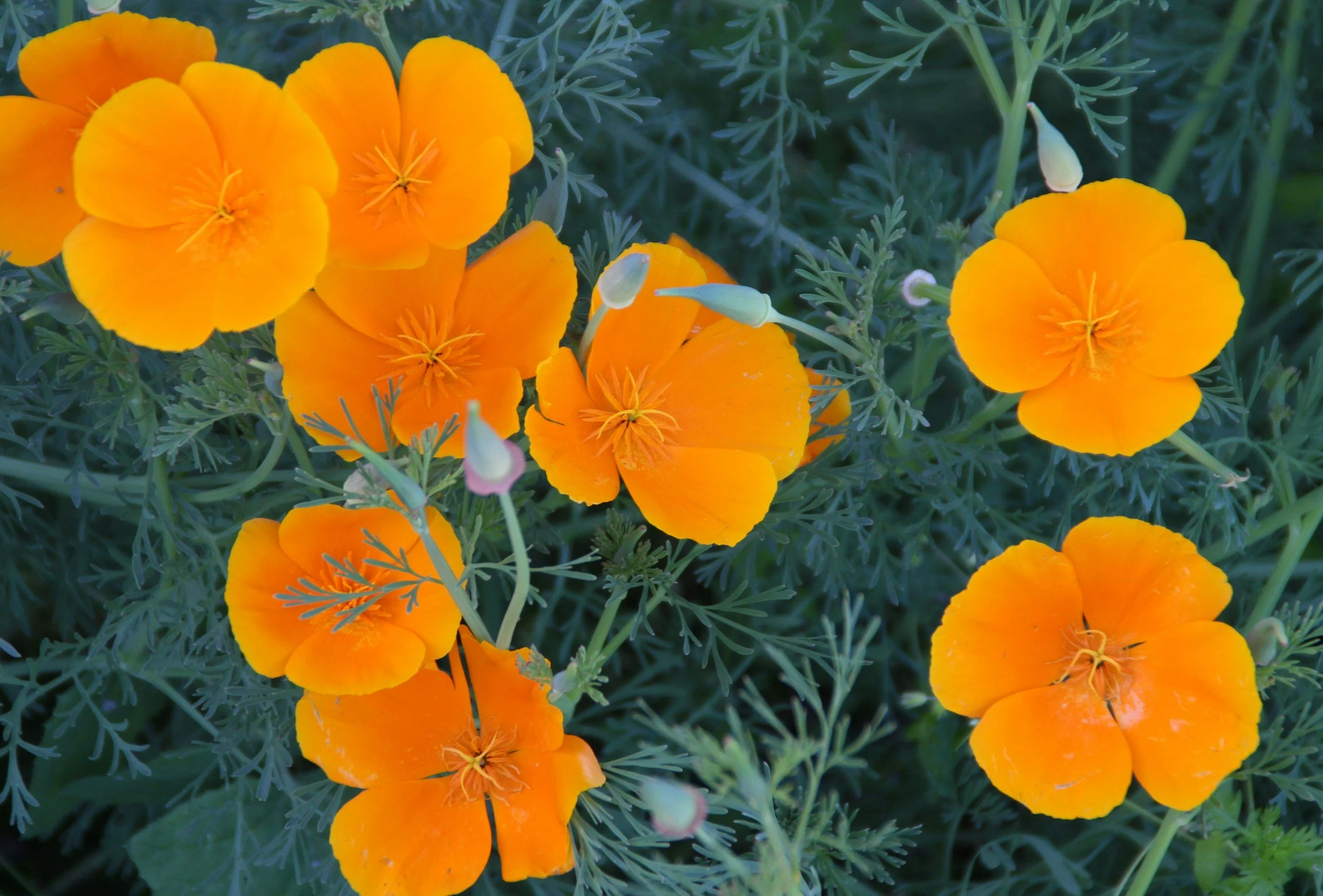
I truly don’t understand the fear-mongering with ‘aggressive’ native plants. My plants are straightforward to manage. If they’re too prolific and spread somewhere I don’t want them, I pull the seedling and compost it. Suckering shrub? Prune the new shoots. Easy as that!
INVASIVE VS. AGGRESSIVE
Loving something sometimes means you develop weird pet peeves. And for me, that has become the misuse of ‘invasive’ and ‘aggressive’ in the plant world. People will use these terms interchangeably. You may think I’m just being pedantic, but this has real-world implications.
Invasive and aggressive are not synonyms in the context of plants. While some invasive plants may also be aggressive, aggressive plants are not inherently invasive. Invasive is a legal category for harmful introduced plants and aggressive is the spreading behavior of a plant. Think ‘destroying the planet’ versus ‘being big-boned.’
When gardeners use these words interchangeably, it muddies the water about which species are on government noxious lists versus which species require space planning and size control. Clarity is vital when we’re wanting a community effort to protect our local ecosystems. We should make plant terms as universally understandable as possible so that everyone can contribute to fighting invasive plants.
Plant pedantry for a purpose! Let's save the world. Happy gardening!
REFERENCES
https://www.encyclopedia.com/plants-and-animals/botany/botany-general/weeds
https://capeconservationcorps.org/a-weed-by-any-other-name-any-name-please/
https://www.nybg.org/blogs/plant-talk/2016/08/horticulture-2/a-weed-by-any-other-name/
https://auberge.com/mauna-lani/stories/culture-sustainability/
https://www.invasivespeciesinfo.gov/subject/environmental-and-ecological-impacts
https://extension.usu.edu/planthealth/research/invasives-ecosystem-effects
https://education.nationalgeographic.org/resource/generalist-and-specialist-species/
https://frontrange.wildones.org/why-do-i-need-larval-host-plants-in-my-yard/
https://education.nationalgeographic.org/resource/food-chain/
https://www.floridamuseum.ufl.edu/earth-systems/the-insect-effect/
https://www.sciencefocus.com/nature/could-man-survive-without-insects
https://www.reuters.com/graphics/GLOBAL-ENVIRONMENT/INSECT-APOCALYPSE/egpbykdxjvq/
https://earth.org/insects-matter-so-why-are-we-wiping-them-out/
https://www.sciencedirect.com/science/article/abs/pii/S0006320718313636
https://bookshop.org/lists/save-two-birds-one-plant-learn-why-and-how-to-garden-for-wildlife
https://extension.oregonstate.edu/es/node/97001/printable/print